Get Full Government Meeting Transcripts, Videos, & Alerts Forever!
Get email alerts on the Urban Renewal Grants topic
No spam. Unsubscribe anytime.
Urban renewal staff seek feedback on major changes to property rehabilitation program and five-year spending plan
Summary
City staff proposed consolidating grant categories, raising approval thresholds, adding a $25,000 single-family grant category with a 30% match, allowing sprinkler and roof work only as part of larger projects, and introduced a tracking spreadsheet tied to a $6.1 million substantial amendment; board feedback was mixed and staff will return in January.
City staff presented proposed revisions to the Columbia Gateway Urban Renewal Agency’s property rehabilitation grants and development funding agreement (DFA) procedures and asked the board for guidance rather than a formal decision.
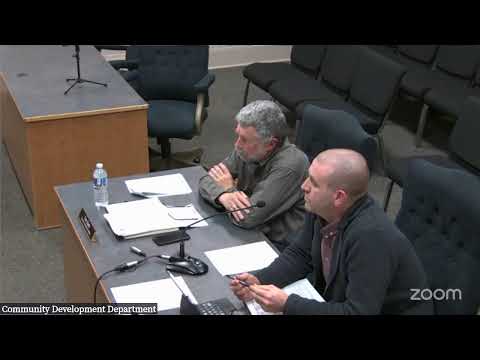
Dan Spotts, the city’s economic development officer, told the board the proposals are discussion drafts intended to increase project capacity and clarify program rules. "We do have 2 items for discussion only, not looking for any decisions tonight," Spotts said, laying out options that include consolidating commercial and mixed-use grant categories and modifying administrative approval thresholds.
Staff said the current incentive categories include differing caps (described in the packet as roughly $50,000 and $150,000) and proposed combining those categories to create a single, larger-cap grant that could better support more impactful projects. The proposal would permit staff discretion to approve larger awards up to a new administrative ceiling, with projects above that ceiling handled through DFA agreements brought to the board for review.
The draft also proposes a new single-family residential grant category capped at $25,000 with a proposed 30% homeowner match. "These are small ones, $25,000," Spotts said. "So homeowners may be under a tight budget, and we'd be giving them a hand." One board member questioned whether a 30% match is sufficient, saying the city would effectively be funding most of those projects.
On eligible uses, staff recommended against funding standalone sprinkler-system installs or isolated roof repairs but would consider those costs if included within larger rehabilitation projects. The intent, staff said, is to avoid using public urban renewal funds for routine maintenance while enabling safety or life-safety upgrades as part of comprehensive renovations.
To prioritize DFA requests, staff proposed a simple point-based scoring system that would award points for factors such as job creation, private investment ratio and demonstrated owner experience. Spotts acknowledged ROI estimates are speculative and said the city would work with the county assessor to produce simpler, more immediate measures of near-term tax benefits rather than multi‑decade forecasts.
Staff also introduced an administrative tool and schedule tied to the council-approved substantial amendment that adds roughly $6.1 million in funding capacity through 2029. The spreadsheet tracks maximum indebtedness (MI), year-by-year cash carryforward and project placement so staff and board members can see whether accepting a new project will exceed spending authority in any fiscal year.
Board members expressed mixed views. Some supported modest increases to administrative approval thresholds to speed smaller projects; others cautioned that raising the ceiling risks politically sensitive decisions being made without board oversight. Several members urged clearer, less subjective definitions of what constitutes a "larger" project, and one member recommended a higher homeowner match for single‑family grants.
Spotts said staff will refine the proposals, incorporate board feedback and return with more complete drafts in January. He also proposed issuing an annual notice of funding availability (NOFA) so potential applicants understand program timelines and thresholds. The board did not take any formal votes on program changes during the meeting.