Get Full Government Meeting Transcripts, Videos, & Alerts Forever!
Get email alerts on the Transportation topic
No spam. Unsubscribe anytime.
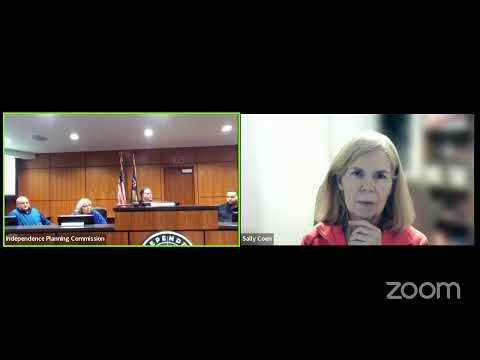
Commission views video on 'induced demand' and discusses transit, bike lanes and funding
Summary
After viewing a video explaining 'induced demand,' commissioners debated alternatives to lane expansion — including separated bike paths, roundabouts and trolleys — and discussed funding constraints and the need for community buy-in in rural settings.
The commission viewed a recorded presentation on 'induced demand' and discussed whether lane expansion or alternative investments better address congestion. A narrator in the recording described how widening roads can lead to added traffic and cited the Katy Freeway expansion as an example; the recording argued for reallocating lanes to transit and protected bike facilities.
The video narrator stated, “This phenomenon is called induced demand,” and later, “Building more lanes will not solve traffic.” Commissioners responded that while induced-demand ideas are valid, rural and small-town contexts require careful design and community trust. One commissioner noted the difficulty of offering transit alternatives in less-dense areas and urged policies that provide choice rather than simply removing driving options.
Discussion covered practical improvements — such as roundabouts and signal upgrades — that can improve intersection efficiency, and a commissioner urged balancing investments across roads and alternative modes. Commissioners also referenced available state transportation funding; one cited a figure of $1,750,000,000 in state road-structure funds, and staff mentioned a $260,000,000 project cost as context for relative spending choices. No formal action was taken; the discussion was framed as policy context and a planning interest for future work programs and grant pursuits.