Get Full Government Meeting Transcripts, Videos, & Alerts Forever!
Get email alerts on the Zoning Fences topic
No spam. Unsubscribe anytime.
Independence staff pitches rule to allow chain-link fencing where majority of block already has it; commissioners stress clarity and enforcement
Summary
Staff proposed allowing chain-link fencing on lots that mirror the surrounding block (suggested threshold: 50% of lots), with an explicit ban in the Independence Historic District; commissioners questioned enforcement, measurement methods and suggested refining the percentage and language.
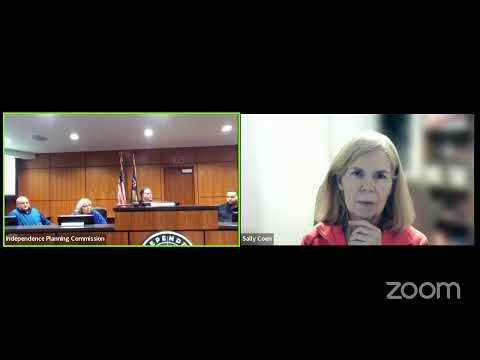
City planning staff presented a proposed amendment Dec. 2 to the city’s event/fence standards that would allow chain-link fencing on properties when a qualifying share of neighboring residential lots already has visible chain-link, while retaining a ban in the Independence Historic District.
Fred, the city planner, said the draft approach was intended to respond to requests from property owners while avoiding new pockets of chain-link in parts of town with predominantly non-chain-link character. “If you have chain-link on 50% of the properties on your block, like, if more than half the properties have chain-link on their property, then you could use chain-link in a similar location as those other properties,” he said, describing 50% as the initial working threshold and noting that any number could be adjusted.
Commissioners raised enforcement and clarity concerns. One commissioner asked whether the tally would be by number of lots or by visible footage and whether the city has authority to ban chain-link; Fred said the state allows local bans and cited the International Code Council (ICC) guidance that a building permit cannot be required for certain fences under 7 feet in height. He added that the city’s fence permit fee is $35 and that planning staff have previously enforced illegal fences by notifying property owners.
Commissioners discussed lowering the threshold to 40% to avoid over-permissiveness, and urged staff to keep the rule simple so it can be consistently enforced. Fred said he would analyze typical block lot counts and test sample blocks to identify a clear percentage that fits common block configurations and return refined draft language at a future meeting.
No formal action or vote was taken on the fence-standard draft on Dec. 2; staff will return with clarified wording and recommended thresholds. The commission emphasized simplicity and enforceability as primary objectives if the code is relaxed.