Get Full Government Meeting Transcripts, Videos, & Alerts Forever!
Get email alerts on the Utilities Sdc Rates topic
No spam. Unsubscribe anytime.
Sandy hears steep SDC, rate projections; staff to post 90‑day notice and hold Dec. 2 public hearing
Summary
Consultants told Sandy City Council the city’s water SDC could be about $18,477 per meter capacity equivalent and wastewater near $15,000 per MCE; no action was taken tonight — staff will publish the SDC report and post the required 90‑day notice before a Dec. 2 public hearing.
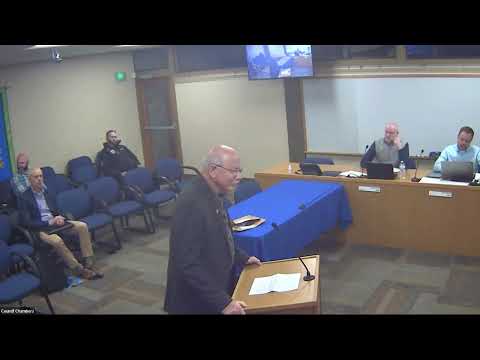
Consultants and city staff presented a sweeping update to water and wastewater system development charge (SDC) methodology and the utility rate model during the Sandy City Council meeting. John Giarducci of FCS Group told the council the methodology produces a modeled water SDC of about $18,477 per meter capacity equivalent (MCE) and a modeled wastewater SDC just under $15,000 per MCE. Tyler Wallace, the city’s finance director, said the presentation was informational and that the city will publish the SDC report and issue the statutorily required notice ahead of a public hearing.
Giarducci framed SDCs as “the one‑time fees paid at the time of development by new development and certain types of redevelopment,” authorized under Oregon statute for services such as water and wastewater, and stressed that SDC revenue can be used only for capital projects, not operations. He explained the two standard SDC components — a reimbursement fee for unused, existing capacity and an improvement fee for growth‑related future projects — and said Sandy’s analysis shows little unused capacity, so the improvement fee accounts for most of the modeled charge.
Wallace told the council there was no rate or methodology adoption tonight and described the next steps: formalizing the methodology, making the report available for public scrutiny, posting the required 90‑day notice and holding a public hearing. “We plan to bring the resolution to adopt these fees, and hold the public hearing on December 2,” Wallace said.
Councilors pressed staff and the consultant on multiple technical points: how project debt is treated when determining SDC‑eligible cost bases, which capital projects were counted in the 30‑year project list, and why some comparable cities’ published SDC figures differ from the table shown. Giarducci acknowledged a data iteration issue in the comparables table for Sandy and said the consultant and staff would verify inputs and provide corrected comparables and source citations before the report is finalized.
Staff also summarized projected near‑term utility rate increases that underlie the city’s financial plan: a 36% increase for water, an 11% increase for wastewater and a $2 per ERU increase for stormwater as modeled in the adopted budget. Wallace estimated those steps would raise an average utility bill by roughly $34 per month for a typical customer (that average in the presentation included the city’s SandyNet service tiers; staff said comparisons to other cities may exclude SandyNet). Wallace urged clear public outreach and proposed a direct mailer after council adoption to explain the January implementation if the council adopts the rates.
No formal SDC or rate adoptions occurred at the meeting. The only formal vote recorded this evening was adoption of the consent agenda (minutes from Nov. 4, 2024), a motion moved by Councilor Hopkinson and seconded by Councilor Sheldon that the council approved. The council’s procedural direction was to move the SDC methodology forward for formal notice and public hearing rather than adopt final rates or charges tonight.
The city’s immediate next steps are those required by state law and described by staff: finalize the consultant’s report with corrected comparables and sources, post the report for public review in the 60‑day period that falls inside the 90‑day notice window, and hold the public hearing scheduled for Dec. 2. After the hearing the council may vote to adopt the methodology and set final rates and charges.