Get Full Government Meeting Transcripts, Videos, & Alerts Forever!
Get email alerts on the Contingent Faculty topic
No spam. Unsubscribe anytime.
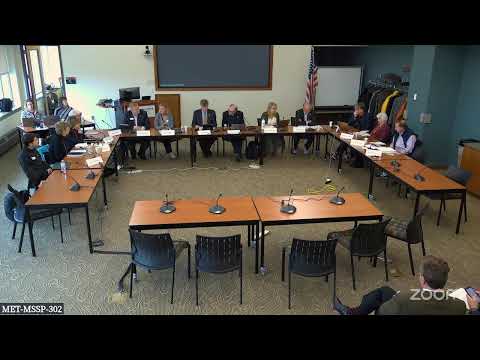
Minnesota State trustees hear hour‑long study session on contingent faculty as long‑term adjuncts describe precarity
Summary
At a study session, system leaders gave counts and contract context for contingent appointments while contingent instructors described years of service paired with short‑term scheduling that can strip benefits and cause financial and mental‑health harm.
The Board of Trustees of Minnesota State held a one‑hour study session on contingent faculty (date not specified) during which system leaders and contingent instructors laid out system counts and personal accounts of instability and lost benefits.
Vice Chancellor Davis opened with a definition: contingent appointments are "not unlimited, not probationary, not tenure track," and he gave system counts: college faculty headcount of 1,794 contingent instructors (about 45% of headcount; 614 FTE ≈ 23%), and university contingent headcount of 1,308 (about 45% headcount; 561 FTE ≈ 27%). Davis also cited College Faculty Agreement Article 20, Section 7, noting colleges must have at least 70% of total FTE in unlimited appointments (and state colleges not less than 60%), which places a contractual cap on contingent appointments.
Senior Vice Chancellor Satasha Greensteven emphasized the instructional value of contingent faculty, saying many bring specialized, real‑world expertise and help expand course offerings that contribute to student access. Union leaders and contingent instructors countered that those benefits coexist with chronic employment uncertainty.
Kevin Lindstrom, president of Minnesota State College Faculty (MSCF), urged the board to consider stability and fairness for contingent instructors. "Exploitation of contingents," he said, "Just because it's happening a lot doesn't make that exploitation okay," and he questioned whether the current level of managerial flexibility is necessary when fall‑to‑fall retention of contingent faculty averages about 70%.
Several contingent instructors offered personal testimony. Faith Erickson, a temporary part‑time instructor at Saint Cloud Technical & Saint Cloud State, described 16 years of service and the stress of not knowing each semester whether her course load will qualify her for benefits: "We live in about 3 months of uncertainty each semester until the next schedule comes out." Elizabeth Weixel, a TPT instructor at Anoka‑Ramsey, said a recent cut to 3 credits would have meant a 40% pay cut and "no access to health benefits," forcing her family to forgo needed therapy until credits were recovered.
Jenna Chernaga, president of the Inter Faculty Organization (IFO), summarized contract categories (fixed‑term, adjunct, community faculty), explained fixed‑term limits and the prior‑consideration provisions, and warned that affirmative‑action considerations can override prior consideration for conversion to a permanent search. Chrissy (Christie) Fine, a fixed‑term nursing instructor at Winona State, described repeatedly reapplying through full search processes despite already teaching and contributing to the department.
Trustees and presidents acknowledged the complexity: they repeatedly balanced the system's need for flexibility—to respond to enrollment shifts and to staff new or short‑term workforce programs—with calls to reduce precarity, improve benefit stability, and ensure fair treatment. The board paused the study session to begin its regular meeting, saying the discussion supplied needed context for future deliberations.
The next procedural step noted in the meeting was a short break and the board's return to regular meeting business (call to order and roll call).