
Jackson County presentation outlines expensive, multi-jurisdiction plan to reshape Bear Creek Greenway
Get AI-powered insights, summaries, and transcripts
Subscribe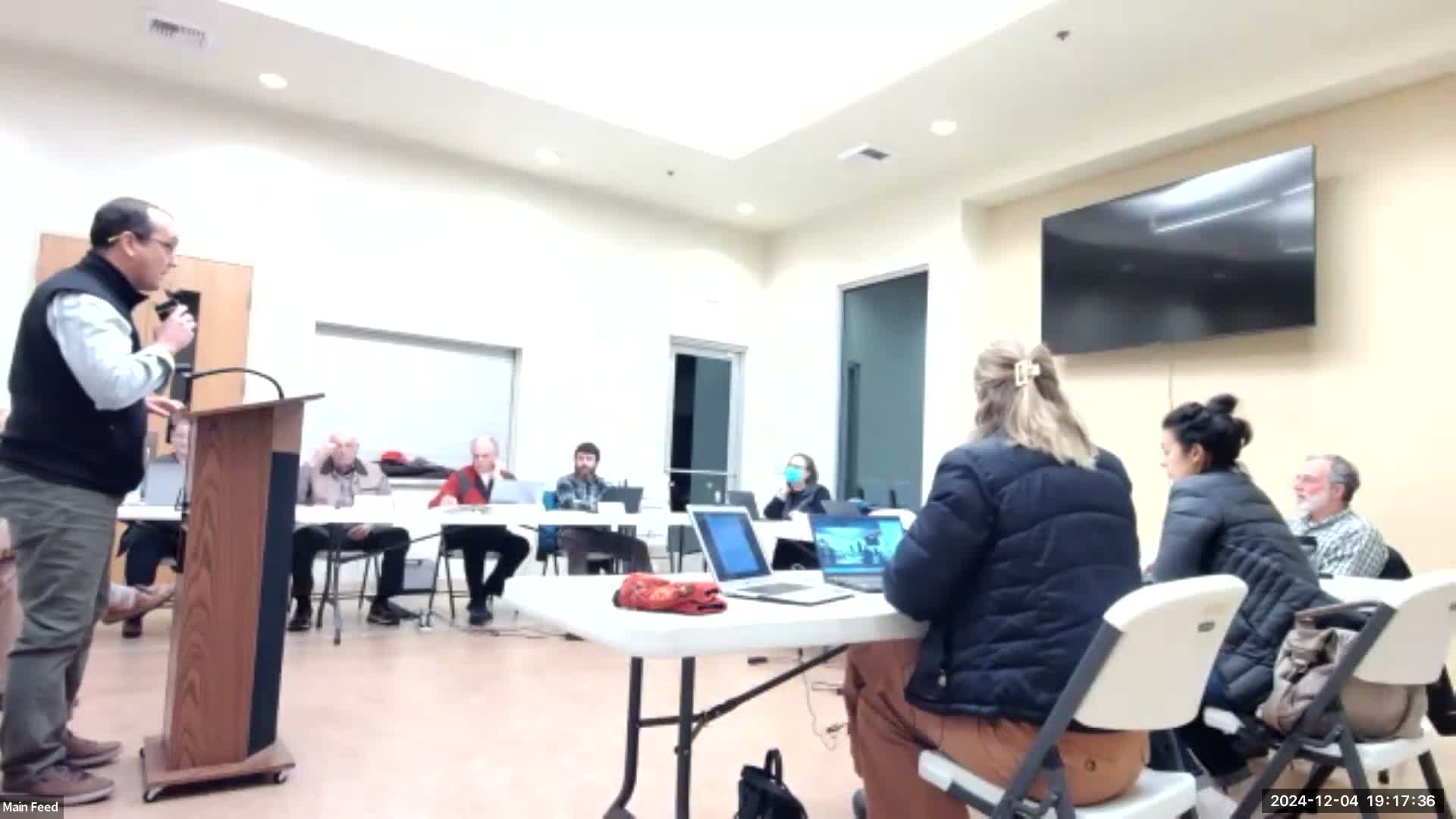
Summary
Jackson County and Alta Planning presented the Envision Bear Creek Greenway plan to the Talent City Council, outlining priorities from safety and vegetation management to a ranger program, and recommending a new taxing district and hybrid governance that could cost property owners about $44–$66 per year under a full funding scenario.
Jackson County and Alta Planning & Design presented the Envision Bear Creek Greenway plan to the Talent City Council on Dec. 4, urging multi-jurisdiction cooperation, new maintenance programs and a funding approach anchored to a dedicated taxing district. "This project was founded by the county," said Steve Lambert, Jackson County parks director, and the plan covers the 22-mile Greenway from Ashland to Central Point.
Mike Selinger of Alta Planning and Design said public input was extensive: "Over 3,000 people, talk to us about this project," and the consultants found safety and maintenance were top priorities. The recommended actions include a trail ranger program to provide a visible presence and connections to social services, expanded vegetation and fuel management to reduce wildfire risk, and a governance approach that balances local control and regional coordination.
Alta estimated corridor-wide vegetation and fuel management would cost about $926,000 annually. Under the steering committee’s "fully funded" scenario, ongoing costs were estimated at $2,100,000 a year with one-time capital needs of $5,900,000; spread over 10 years the plan authors showed an annualized cost near $2,700,000.
To pay for operations and capital, the plan presents three taxing-boundary options and recommends a tighter district covering properties adjacent to the Greenway. Selinger said a likely levy would be about 20 cents per $1,000 of assessed value — split roughly into 15¢ for ongoing maintenance and 5¢ for capital projects — which the presentation showed would equal roughly $44–$66 a year for the average homeowner depending on jurisdiction.
Council members pressed for more detail on the precise taxing boundary and whether cities would retain control of parks along the corridor; Selinger said the hybrid ORS 190 intergovernmental entity under consideration would allow individual jurisdictions to keep control of developed community parks while coordinating corridor-level operations and funding. Councilors also asked for a breakdown of the plan’s projected economic benefits and for the planning team to provide clearer maps of the proposed taxing district.
The presenters said the plan is intended to be implemented through staged partnerships among the five cities, Jackson County, ODOT and other stakeholders; they offered to provide more detailed fiscal modeling and recommended further local discussions before any levy is placed before voters.
Next steps: Selinger and Lambert told council they will provide the requested maps and economic-impact figures and continue coordination with Talent staff and regional partners.