Get Full Government Meeting Transcripts, Videos, & Alerts Forever!
Get email alerts on the Solid Waste topic
No spam. Unsubscribe anytime.
Consultants lay out costs and risks of bringing waste collection in-house; hybrid residential-first approach recommended
Summary
Consultants for North Miami Beach told commissioners that fully insourcing residential trash would likely raise costs and require large capital outlays, while a hybrid model—bringing residential service in-house and leaving commercial and multi‑residential accounts with the contractor—could lower transition costs and address many service complaints.
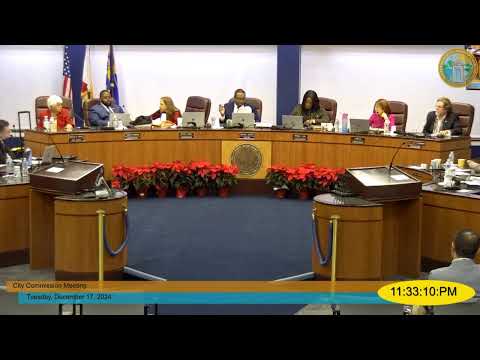
Consultants retained by North Miami Beach presented a three‑option analysis of the city’s trash and recycling service on Dec. 17, concluding that the city could improve customer service by bringing residential collection in‑house but would face significant up‑front costs and legal risk if it attempts to replace the contractor for all service.
Hill International and consultant Jim Harnam told the commission that the current contract with Coastal Waste runs through 2029 and contains no termination clause, and that attempts to end it early could require paying the contractor for loss of profit. Harnam estimated the all‑in model would cost roughly $11.2 million a year in operating costs with about $25 million in initial capital for new trucks, carts and shop space; a hybrid approach that brings residential service back to the city while leaving industrial, commercial and multi‑family pickup to the contractor would cost substantially less — roughly $4.8 million to $6.4 million annually depending on whether used or new equipment is used and how leases are structured.
“The status quo offers you a revenue source through franchise fees,” Harnam said, urging caution about losing that revenue. He and colleagues noted that in‑house service transfers many operational risks back to the city — equipment maintenance, hiring and training, and environmental and regulatory compliance — while giving the city more direct control over routes and complaint response.
Commissioners repeatedly pressed consultants on tradeoffs. Commissioner Chernoff said lease and lease‑to‑own options for trucks could reduce the large capital hit; Vice Mayor Phil Smith said residents value the “personal element” of city staff responding directly to neighbors and urged that the study weigh that benefit alongside dollars and cents. Commissioner Hsu pressed for a clearer transition schedule, yard/maintenance‑facility siting, and the likely liabilities of terminating the existing contract.
Consultants recommended a staged path: begin by negotiating with Coastal for a residential carve‑out, examine leasing used equipment to lower up‑front costs, pilot residential insourcing with a transition team, and then reassess whether to bring additional services in‑house once procedures and staffing are proven. They also recommended near‑term operational improvements regardless of delivery model — better recycling outreach, a two‑person crew for bulk pickup to reduce missed collections, and sidewalk litter vacs to address visible litter concerns.
The presentation prompted dozens of public comments during the meeting’s public‑comment period — many residents complained of repeated missed pickups and of inconsistent instructions about where to place carts. Commissioners asked staff to return with further budget detail, legal options related to the contract, comparative rates charged to commercial accounts in nearby cities, and the potential for revenue opportunities in the existing contract.
Next steps: staff said they will incorporate commissioners’ questions into the final consultant report and bring back recommended actions, including whether to authorize negotiations with the current contractor or to pursue a hybrid implementation plan.