Get Full Government Meeting Transcripts, Videos, & Alerts Forever!
Get email alerts on the Beyond 2025 topic
No spam. Unsubscribe anytime.
Chesapeake Bay Executive Council charges revision of 2014 watershed agreement, creates agriculture advisory committee
Summary
At a public meeting in Annapolis the Chesapeake Bay Executive Council issued a "Beyond 2025" charge to revise the 2014 Chesapeake Bay Watershed Agreement over the next 18 months and established a new Agriculture Advisory Committee to integrate farmers and agricultural experts into restoration planning and implementation.
Annapolis — The Chesapeake Bay Executive Council on Monday adopted a "Beyond 2025" charge to guide an 18‑month effort to revise the 2014 Chesapeake Bay Watershed Agreement and voted to establish a fourth Agriculture Advisory Committee to bring farmers and agriculture stakeholders into Bay planning.
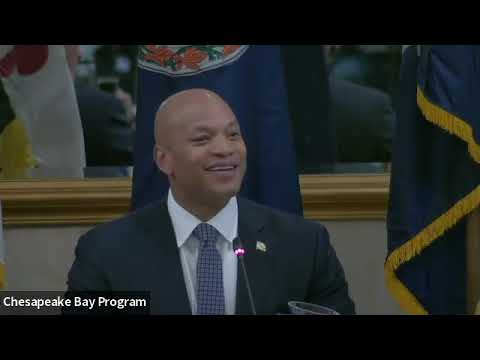
Governor Moore, speaking as chair of the council, framed the measures as part of a broader effort to keep the partnership ‘‘focused, measurable and people‑centered.’’ "We issued a beyond 25 charge, which will direct the partnership separate over the next 18 months to revise and update our existing 2014 Chesapeake Bay and Watershed agreement," he said.
The move follows recommendations from a 29‑member Beyond 2025 steering committee that drew input from hundreds of partners and stakeholders and forwarded two core recommendations to the Principal Staff Committee: amend and update the existing agreement and maintain a strong partnership while streamlining governance. Martha Shimpkin, director in the EPA Chesapeake Bay program office, said the steering effort prioritized five focus areas — climate, people, clean water, living resources and healthy habitats — and recommended measurable, science‑based outcomes.
Advocates on the council emphasized agriculture's central role. Governor Glenn Youngkin described voluntary, incentive‑based approaches and Virginia investments in agricultural best management practices and wastewater upgrades as key to progress. "We have funded record investments in our wastewater upgrades," he said, adding that Virginia saw increased participation in its agricultural cost‑share program.
Governor Shapiro (Pennsylvania) highlighted his state’s investments and local restoration examples, citing about $1,000,000,000 invested in restoration efforts since 2019 and community projects — such as a Turtle Creek stabilization — that led to improvements in water quality and removal from an impaired list. He and other council members endorsed the new agriculture committee as a vehicle to scale partnerships with farmers.
Council members and federal officials said the charge is meant to accelerate near‑term, measurable actions — including a renewed emphasis on shallow‑water habitat restoration — while updating accountability and monitoring systems. Jane Nishida, EPA acting deputy administrator, said measurable outcomes and monitoring will be core elements of implementing the steering committee’s recommendations: "One of the key elements to the success of the Bay program is having those measurable outcomes and accountability and working very much with the partnership groups that we talked about here."
The council did not vote on numeric target changes for the Bay’s TMDL (Total Maximum Daily Load) in the public session; instead members directed staff and the Principal Staff Committee to take forward the steering committee’s recommendations and to develop updated accountability and monitoring plans for review over the coming months.
Next steps include the Principal Staff Committee assessing the steering committee recommendations and producing proposed revisions to the 2014 agreement. The council also directed formation and initial membership planning for the Agriculture Advisory Committee; staffing, precise membership criteria and a timeline for committee deliverables were not specified in the public remarks and will be determined by the Principal Staff Committee and agency staff.