Get Full Government Meeting Transcripts, Videos, & Alerts Forever!
Get email alerts on the Transportation topic
No spam. Unsubscribe anytime.
Central Virginia Transportation Authority outlines $1.2 billion in regional projects and timelines
Summary
Sean Davis, chair of the Central Virginia Transportation Authority, gave an update on CVTA-funded projects across nine localities, citing roughly $720 million in regional allocations and more than $1.2 billion available to the region and describing schedules for major highway and transit projects through the late 2020s and early 2030s.
Sean Davis, a member of the Hanover County Board of Supervisors and chair of the Central Virginia Transportation Authority, provided a regional update on the authority’s projects and funding priorities, saying the authority has helped advance projects that otherwise would have awaited state or federal funding.
Davis said the CVTA was created by the General Assembly in 2020 to identify and fund priority transportation investments across nine Central Virginia localities in Planning District 15. “It’s my pleasure to provide an update on the Central Virginia Transportation Authority and share some of the projects we’re moving forward with heading into 2025,” he said.
Why it matters: Davis said CVTA funding has accelerated work on major corridor and local street projects, which the authority argues will improve congestion, safety and accessibility across the region. He reported that, through three regional rounds of funding, the authority has supported 64 projects totaling about $720 million in regional allocations and, including distributions to local governments and the Greater Richmond Transit Company (GRTC), has made more than $1.2 billion in transportation funding available to the region. The transcript contains a garbled accounting date; the story does not assume a precise reporting cutoff beyond what the speaker stated.
Key projects and timelines described
- Interstate 64 Gap (New Kent and James City counties): CVTA funding was described as contributing $100,000,000 to help complete work on a roughly 29‑mile construction corridor. The project will add a third lane in each direction; the first section was scheduled for completion in summer 2027 and the second in 2029, per the update.
- Woolridge Road extension (Chesterfield County): The authority’s funding — stated as $37,500,000 in the presentation — supports an extension from Old Hundred Road to Route 288, including a roundabout at Old Hundred Road. Right‑of‑way acquisition was described as nearing completion and construction was expected to begin in spring 2025.
- Henrico County (Short Pump area): A package of CVTA regional funds (reported as $60,000,000) will support a newly designed interchange at Northgate Road off I‑64, a reconstructed West Broad Street/I‑64 interchange, improvements on West Broad Street and work on Interstate 295. Davis characterized this as a long‑range plan the authority wants to start as soon as funding and schedules allow.
- Poway Parkway (Chesterfield County) — Phase 1: The presentation described a Phase 1 extension to build a four‑lane roadway to Woolridge Road with a partial cloverleaf interchange at Charter Colony Parkway and overpasses at Bridal Mill Parkway and Water Mill Parkway. CVTA funds were said to have supported preliminary engineering; construction was described as on track to begin in 2027.
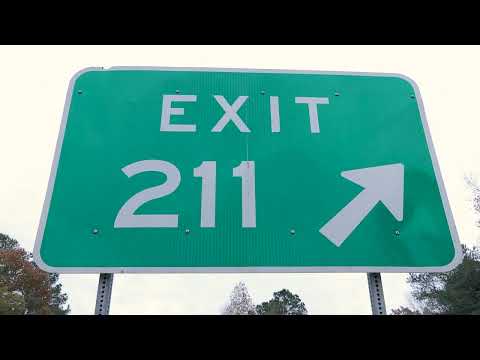
- Exit 211 interchange and Route 106 bridge (New Kent County): Preliminary engineering has begun on improvements at I‑64 Exit 211 tied to a new Buc‑ee’s travel center. The work described includes a roundabout, revised signal configuration and a new two‑lane southbound bridge on Route 106, with construction expected to start next spring.
- North–South Bus Rapid Transit (City of Richmond): A planned BRT line would connect the North Side and South Side using high‑capacity, high‑frequency service along about 2.5 miles of Chamberlayne Avenue from the Henrico line to Lombardy Street, with as many as 14 stations; construction was slated to begin in 2028 in the update.
- Local street and intersection work (Ashland, Hanover, Walnut Grove/Route 360): Davis described signal, pedestrian and ADA improvements at Route 1 and Ashcake Road with preliminary engineering in summer 2025 and completion projected for 2029. A Route 360 and Walnut Grove Road project was described with right‑of‑way and construction to be complete by late summer 2033.
What was not specified or unclear in the transcript
- The speaker cited a funding accounting period with a garbled date in the transcript; the precise reporting cutoff was not specified. - The presentation text includes inconsistent acronyms for the authority (CBTA/CDTA); this article uses Central Virginia Transportation Authority (CVTA) to reflect the correct organization name cited by the speaker.
Closing: Davis emphasized the authority’s impact in a short span of years: “In less than 5 years since its formation, the Central Virginia Transportation Authority is bringing much needed relief to areas where congestion, safety, and accessibility have become increasingly more problematic,” he said. He called service on behalf of the nine localities an honor and framed the authority’s work as turning planned solutions into reality.
Next steps: The update outlines preliminary engineering, right‑of‑way acquisition and staggered construction starts; specific project schedules and funding allocations will be subject to further agency and local approvals and to confirmed procurement timelines.