Get Full Government Meeting Transcripts, Videos, & Alerts Forever!
Get email alerts on the Legal Response topic
No spam. Unsubscribe anytime.
After Supreme Court's Smith ruling, Virginia DFS defends batch processing and offers guidance for testimony
Summary
DFS counsel summarized Smith v. Arizona, told the Scientific Advisory Committee the ruling raises confrontation-clause questions about surrogate testimony, and described steps the department is taking to preserve batch processing, prepare staff and encourage returning analysts to testify (including a $500 honorarium).
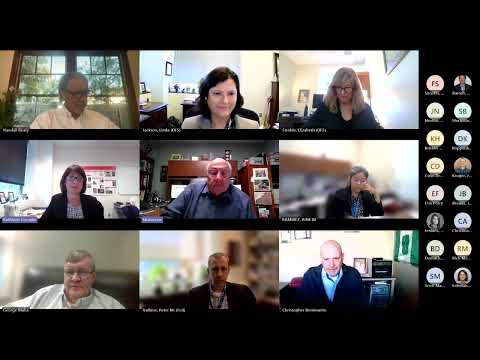
Amy Jenkins, DFS counsel, briefed the Scientific Advisory Committee on the U.S. Supreme Courtmatter Arizona v. Smith and its potential consequences for forensic testimony and lab batch-processing practices. Jenkins summarized the legal issue: whether an expert who did not perform the original testing may rely on another analyst's out-of-court statements and notes to testify without violating the Sixth Amendments Confrontation Clause.
Jenkins said the court in Smith emphasized the constitutional primacy of confrontation rights over evidentiary rules and remanded some issues to lower courts, leaving questions about what constitutes testimonial out-of-court statements. "The question really becomes is if those are hearsay statements, are they testimonial?" she said, adding that the Supreme Court provided only limited guidance and that much will turn on record-specific facts.
The departments response has included outreach to Commonwealths attorneys, distribution of a white paper and cheat sheets, development of predicate questions for prosecutors and defense counsel, and internal guidance for examiners on how to testify without eliciting impermissible hearsay. Jenkins emphasized preserving batch processing where lawful and focusing on identifying a "lead analyst" who can explain and certify the data review and final report. She said DFS also instituted an honorarium policy to encourage retired examiners to return to testify, currently set at $500 per day, and that travel costs remain the responsibility of the subpoenaing party.
Jenkins said DFS will perform reanalyses where the original examiner is unavailable and evidence supports reexamination, and that decisions will be made case by case in consultation with prosecutors and defense counsel. The department is coordinating with other state and federal laboratories and lab counsel nationwide to avoid sudden, disruptive subpoenas and preserve efficient lab practices.
Committee members commended the department's outreach and asked procedural questions about honoraria and cross-jurisdictional coverage for returning examiners; Jenkins said she is working with peers nationwide to align policies and recommended that agencies allow examiners flexibility to return on agency time when feasible.