Get Full Government Meeting Transcripts, Videos, & Alerts Forever!
Get email alerts on the Child Care Regulation topic
No spam. Unsubscribe anytime.
Virginia Board of Education approves revised child day center standards, removes liquid-soap requirement and asks for screen-time guidance
Summary
The Board gave final review approval to revised licensing standards for licensed child day centers, adopting two amendments: striking a requirement that hand soap be liquid and directing the Department of Education to publish guidance on screen time and common variance topics.
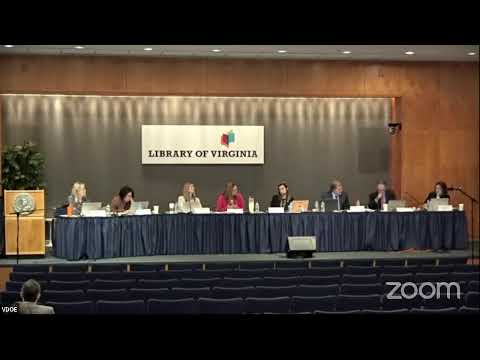
The Virginia Board of Education on Oct. 1 granted final review to a package of revised licensing standards for licensed child day centers, approving amendments to ease certain prescriptive requirements and asking the Department of Education to provide clearer guidance to providers.
Deputy Superintendent Jenna Conway, who led the department’s multi-year process to rewrite inherited Department of Social Services rules, described the draft as “a compromise” balanced between protecting children’s health and minimizing burdens on small providers. She told the board the rules were shaped by more than 240 public comments, a 15-member work group and the Early Childhood Advisory Committee.
Board members debated several technical and substantive changes at length. Dr. Bryce moved to strike a newly added requirement that hand soap be liquid, arguing it would create unnecessary hardship for some programs and families; the motion passed with a recorded roll call (ayes from Doctor Bridal, Mister Hansen, Doctor Northern, Miss McPherson and chair; no votes from Mister Rotherham and Miss Kilgore). The board subsequently directed the department to track and publish variance requests and their outcomes so the board can assess whether the rule framework is working in practice.
Members also asked the department to develop guidance on screen time and on commonly requested variances. Conway said the department would provide guidance similar to what it offers K–12 schools and emphasized the department’s intent to pair implementation with training and resources for providers and inspectors.
Conway noted the regulations include statutorily required elements — such as EpiPen availability and lead-water testing — and that the department used an established cost‑impact methodology to estimate potential financial effects across roughly 2,600 licensed sites. “We tried to strike a balance on how we can improve compliance, reduce duplication and ensure that we keep babies, toddlers and preschoolers healthy and safe,” Conway said.
With the two amendments in place — the liquid-soap requirement removed and a formal request for guidance on screen time and variance processes — the board approved the standards on final review.
The department said it will continue to solicit public comment, take feedback back to the advisory committee, and bring further revisions as necessary before implementation.