Get Full Government Meeting Transcripts, Videos, & Alerts Forever!
Get email alerts on the Licensure Changes topic
No spam. Unsubscribe anytime.
VDOE staff brief advisory panel on licensure changes, reciprocity and new local eligibility license
Summary
VDOE officials updated the advisory board on recent laws and system changes affecting teacher licensure, including expanded career‑switcher options for special education, a reciprocity fast‑track, removal of the VCLA requirement, rollout of the Velo licensure system and procedures for a one‑year local eligibility license that divisions can grant.
Robert Gilstrap, assistant superintendent for educator preparation at the Virginia Department of Education, told the advisory board the department is implementing several legislative changes passed this year that alter teacher licensure pathways and agency processes.
The most immediate changes include: adding special education to the career‑switcher program; HB 632 and related bills that clarify reciprocity and create an online state comparison tool; removal of the VCLA as a statewide licensure requirement; and a new one‑year local eligibility license (LEL) that allows school divisions to authorize a candidate to teach in their division for one year under limited statutory criteria.
"We are currently going through a slight reorganization," Gilstrap said in his opening remarks as he reviewed the bills and their implications for licensure review and division practice. VDOE staff emphasized the department’s role as monitor rather than primary issuer of LELs: divisions must submit a short attestation and a minimal application so DOE can log and track LEL issuances; DOE will not perform a full provisional evaluation at the moment of the LEL issuance.
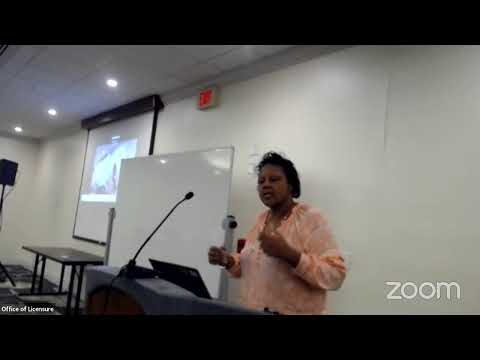
Bridal Jackson, director of licensure, presented licensure data and operational changes. Jackson said VDOE’s licensure office is finalizing phase‑two of Velo, an online licensure system that will add renewals, endorsement changes and the ability for applicants to print license copies on demand. Jackson also reported improved processing times after staff increases: specialists’ case wait times are generally down to 30 days or less.
Jackson provided data on the scale of licensure activity: roughly 106,000 employed educators in the Commonwealth, about 159,396 active licensed records and more than 400,000 inactive license records on file. She said the office issued roughly 14,000 initial licenses and nearly 20,000 combined licenses in the 2023–24 year.
On the LEL, Jackson said the statutory requirements are intentionally minimal (bachelor’s degree, age and division recommendation) and that DOE has built an attestation form and backend reporting so divisions’ LELs will be visible in confidential and public licensing searches once the new license type is implemented. She warned divisions that the LEL is a one‑year, nonrenewable authorizing mechanism and that DOE will monitor use and later evaluate individuals who seek provisional licensure.
Panel members asked technical and equity questions during an extended Q&A: whether LEL service counts toward provisional license tiers (DOE said it depends on circumstances and the full evaluation is done when a provisional application is submitted), how LELs will appear in IPAL/SSWS reporting (DOE is building flags), whether the 5% workforce cap in the law limits divisions’ usage of the LEL (it does), and how background checks and ongoing fitness reporting will be handled (criminal background checks remain a division responsibility; DOE receives threshold alerts and adverse actions for review).
What happens next: DOE will continue to distribute guidance and forms on the department website and via licensure update emails; staff said they will collect the short LEL attestations from divisions as an interim tracking measure and will perform full provisional evaluations when a candidate applies for provisional licensure after the LEL year ends.