Get Full Government Meeting Transcripts, Videos, & Alerts Forever!
Get email alerts on the Waterfront Development topic
No spam. Unsubscribe anytime.
Port Commission approves exclusive negotiating agreement for Seawall Lot 337 and Pier 48
Summary
The Port Commission authorized an exclusive negotiating agreement with the developer team led by the San Francisco Giants and partners for Seawall Lot 337 and Pier 48, establishing a two-phase timetable, fee structure and benchmarks to guide environmental review and negotiations.
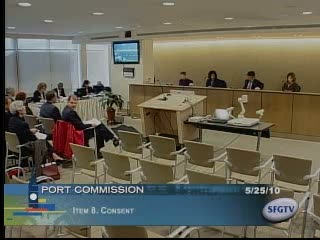
The Port Commission on May 25 authorized an exclusive negotiating agreement (ENA) with the developer team selected for Seawall Lot 337 and adjacent Pier 48, a major waterfront site the port described as one of its most important future revenue-generating properties.
Jonathan Stern, planning and development staff, told commissioners the ENA is structured in two phases. Phase 1 is intended to take about 24 months (with up to a six-month extension) to produce a revised concept and an agreed term sheet for subsequent approvals; Phase 2, estimated at 36 months (with potential extensions), covers regulatory review and CEQA with intermediate benchmarks including an initial study and draft environmental impact report. Stern said the schedule reflects the project’s size and market uncertainty and compared it with other multi-year waterfront projects such as Treasure Island and Mission Bay.
Staff described negotiating fees and transaction-cost arrangements intended to share risk with the developer: a negotiating fee of $100,000 per year in Phase 1 and $150,000 per year in Phase 2, with certain third‑party transaction costs and staff time budgets paid by the developer; portions of fees may be deferred but some amounts could become due in cash if contractual benchmarks are missed. Stern also said the port will acquire the resulting project materials, subsurface and structural information and residual rights to make port use of the due-diligence work.
The developer team identified in the presentation includes the San Francisco Giants and several private partners; Jack Baer of the Giants addressed the commission in public comment and thanked staff and commissioners for their work. A public commenter, Michael McKenzie, urged the commission and developers to include a Sports Management Pathway and Career Academy as part of any arena-related program; Stern and commissioners acknowledged the suggestion and said community benefits would be part of subsequent negotiations.
Commissioners asked several detailed questions about the fee deferral and the conditions under which deferred fees would ‘go hard’ and become payable. Stern said the ENA incorporates benchmarks and financial signposts intended to create incentives and to allow the port to collect transaction costs if the project succeeds.
A motion to approve the ENA was moved, seconded and adopted (resolution recorded in the meeting as Resolution 10-32). The commission did not record a roll-call vote tally in the transcript beyond unanimous voice approval.