Get Full Government Meeting Transcripts, Videos, & Alerts Forever!
Get email alerts on the Public Comment Policing topic
No spam. Unsubscribe anytime.
Public commenters press Police Commission on staffing, accountability and an unsolved homicide
Summary
At the June 24 meeting public commenters urged the commission to reduce officer administrative roles, questioned enforcement equity, alleged improper evictions, and asked for updates on a 2006 homicide; the chief urged tips to an anonymous line and cited a $250,000 reward.
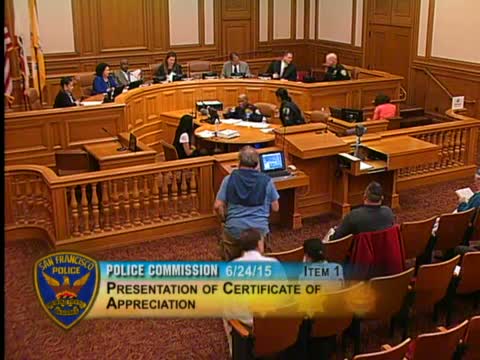
Multiple members of the public addressed the Police Commission on June 24, pressing elected and appointed officials on policing priorities, the department’s budget and unresolved criminal cases.
Emile Lawrence urged the commission to shift some paperwork and administrative tasks away from sworn officers and toward civilian staff to get more officers on the street and reduce payroll pressure. "I think this commission should push to get the police department higher…to be administrative staff," Lawrence said during public comment.
Michael Petrellas described a past arrest after he photographed an elected official in a public restroom and contrasted his treatment with press photographers who were not arrested, saying he believed enforcement was unequal. Vladimir Prikopiet, who identified himself as homeless, accused police of evicting him without a court order and used strong language to describe his experience.
Paulette Brown asked specifically for assistance and an update in the cold case homicide of her son, Aubrey Aprakasa, killed on Aug. 14, 2006. The chair asked Chief Gregory P. Sier to provide an update during his report. The chief said investigators have identified persons of interest in the case, urged anyone with information to call the anonymous tip line at (415) 575-4444 and confirmed a $250,000 reward is being offered for information leading to an arrest.
Other public commenters called for greater accountability, questioned recent board and departmental decisions to increase staffing, and criticized racial disparities in arrests and convictions cited by speakers. Commissioners and staff refrained from extended exchanges during the public-comment period, consistent with the commission’s rules, and the chair noted that investigators were available after the meeting for specific complaints.
The commission did not adopt policy changes during the public-comment period; commissioners heard the concerns and asked the chief and OCC staff to follow up where appropriate.