Get Full Government Meeting Transcripts, Videos, & Alerts Forever!
Get email alerts on the Stormwater Charge topic
No spam. Unsubscribe anytime.
SFPUC staff proposes stormwater runoff charge and a consultant‑led rate study
Summary
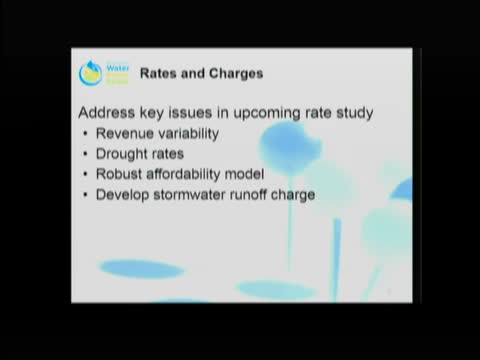
Staff told the commission it is preparing a stormwater runoff charge to recover roughly 20% of wastewater enterprise stormwater costs, based on impervious surface area; an RFP for a rate consultant will be issued and staff expects to return in the fall with implementation options.
The San Francisco Public Utilities Commission heard a staff proposal on Jan. 12 to develop a stormwater runoff charge that would separately recover the portion of wastewater enterprise costs attributable to stormwater management, currently about 20 percent of wastewater costs, Assistant General Manager for Business Services Eric Sandler said.
How it would work: Rather than recover stormwater costs through volumetric sewer charges based on metered water use, the proposed charge would estimate stormwater runoff from property characteristics (the recommended metric is impervious surface area), multiply that by a rate and bill a fixed monthly stormwater charge. Sandler said the approach could be paired with credits and incentives — for example, retention basins or reduced impervious area — to lower bills and encourage on‑site stormwater reduction.
Process and timeline: Staff will issue an RFP for a rate consultant at the end of the month, conduct stakeholder outreach, and expect to bring consultant findings and implementation planning back to the commission in the fall. Sandler emphasized the change would not raise new revenue but would reallocate how existing wastewater/stormwater revenue requirements are recovered.
Questions and concerns: Commissioners asked about the scope for commission input into the consultant’s work and whether affordability and lifeline considerations would be included; staff said the consultant will analyze alternatives and engage stakeholders. Commissioners also asked for more detail on alternative drivers beyond impervious area and for examples from other cities.
Next steps: Staff agreed to return with an engagement plan and more specific cost‑recovery modeling after selecting a consultant.