Get Full Government Meeting Transcripts, Videos, & Alerts Forever!
Get email alerts on the Redistricting topic
No spam. Unsubscribe anytime.
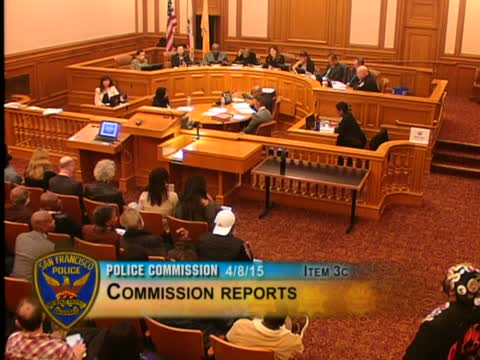
Police commission narrows redistricting options, leans toward Tenderloin border shift to Polk or Van Ness
Summary
After a months‑long public process, commissioners heard controller’s office options that would move the Tenderloin boundary (Larkin vs. Polk vs. Van Ness) and asked staff to return with two refined maps — including a Polk option — for a vote next week.
The Police Commission received a detailed presentation from the controller’s office and its consultant on proposed police‑district boundary changes and directed staff to return with two refined maps for a vote at the next meeting.
Project manager Randy McClure and consultant Kim Craven walked commissioners through four options and the operational implications. The Tenderloin boundary produced the most debate: community members argued that moving the western border to Polk or Van Ness would reduce the ability of drug dealers to exploit district edges, while the chief and command staff stressed operational continuity and the need to avoid fragmenting response areas around City Hall and Civic Center.
The data presented included CAD (computer‑aided dispatch) projections over five years (the presentation noted roughly 50,000 calls affected in one change, described as about 1% of all calls over five years) and small population shifts measured in tenths of a percent. The chief explained that Market Street staffing (36 beat officers) and sector‑car staffing models factor into how many officers any district receives; consultants and the chief discussed the operational consequences of moving Market Street into a different district.
Commissioners asked the controller’s office to prepare two maps — one with a Polk border and one with a Van Ness border — and to bring them back for a vote next week. Several neighborhood speakers from the Tenderloin and Union Square urged change citing safety and quality‑of‑life concerns; others warned that operational coordination across districts could be affected.
Why it matters: Redrawing beat and station boundaries changes which stations respond to calls for service and can materially affect public safety and neighborhood policing patterns. Commissioners balanced data with local input and asked for refined maps to ensure operational feasibility before voting.