Get Full Government Meeting Transcripts, Videos, & Alerts Forever!
Get email alerts on the Community Benefits topic
No spam. Unsubscribe anytime.
SFPUC says community benefits and environmental‑justice policies are being operationalized; youth programs expand
Summary
SFPUC staff told the commission the agency has embedded community benefits clauses into large professional‑service contracts, launched pilots for environmental‑justice integration (including equity metrics and an SSIP trial), and expanded youth workforce and education programming reaching more than 1,300 young people in 2015.
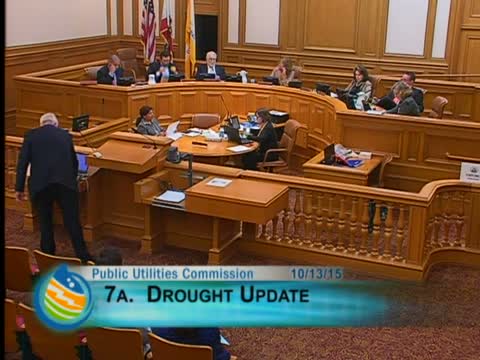
Juliette Ellis, Assistant General Manager for External Affairs, and Yolanda Manzoni, lead for environmental justice implementation, updated the San Francisco Public Utilities Commission on Oct. 13 on steps to move the agency’s community benefits and environmental justice (EJ) policies from requirement to practice.
The most concrete changes: Ellis said the PUC now includes community benefits provisions in professional‑service contracts above $5,000,000 and has leveraged roughly $6,000,000 in commitments from partner firms. Manzoni described a three‑goal framework for EJ implementation — integrating EJ into core decisions, educating staff about EJ as it relates to their daily work, and securing meaningful, demographically representative stakeholder engagement — and outlined pilots tied to the Sewer System Improvement Program (SSIP).
How the pilots work: Manzoni said staff added equity‑based engagement metrics to standard outreach (asking survey respondents to self‑report demographics and benchmarking results against census data) and layered spatial EJ data into a triple‑bottom‑line tool that helps project managers track where gray and green projects are located relative to communities of concern. For large projects such as the biosolids digester, staff plan a socioeconomic companion analysis tied to CEQA in 2016 to assess impacts and opportunities beyond physical environmental impacts.
Education and youth work: Laura Page reported the PUC’s education investments include a forthcoming K–12 environmental literacy curriculum, solar installations on three school roofs, and green schoolyard projects that will use stormwater features and a rainwater‑toilet‑flushing pilot. Page said the agency reached more than 1,300 youth and young adults with paid and experiential work‑based learning in 2015 and is scaling internships and career pathways.
Why it matters: Staff framed the changes as part of a formal effort to make policy a living program rather than a statement on paper, with dedicated staff and performance metrics to track outcomes. Commissioners asked for a comprehensive review of these policies ahead of the upcoming two‑year budget process to confirm whether staffing and authorities are sufficient; several asked for a clear statement of resourcing and measurable outcomes to report back to the commission.
Next steps: Staff will return with impact analyses tied to specific capital projects (biosolids/digester work in 2016) and with evaluation metrics from partnerships with UC Berkeley and the Controller’s Office to measure program outcomes against stated goals.