Get Full Government Meeting Transcripts, Videos, & Alerts Forever!
Get email alerts on the Water Supply And Conservation topic
No spam. Unsubscribe anytime.
SFPUC readies mandatory 10% retail cut, leak-detection push after state drought order
Summary
Acting SFPUC water officials told commissioners that a state order seeking a 25% statewide reduction will put San Francisco in a lower tier (about 10% required for retail customers). Staff described leak-detection postcards, plans to accelerate local groundwater wells and said finance expects a near-term revenue shortfall that can be managed from reserves.
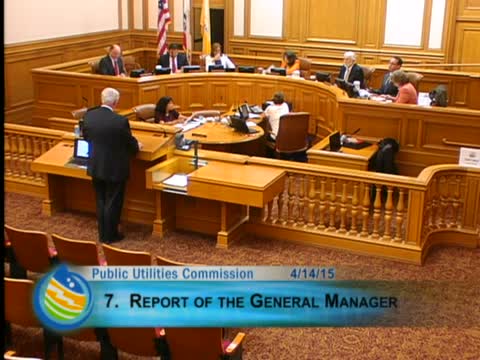
The San Francisco Public Utilities Commission on April 14 heard a drought update from Steve Ritchie, the SFPUC’s assistant general manager for water, who said state action will make the Commission’s voluntary 10% retail conservation goal a mandatory requirement for the city’s retail customers.
Ritchie said state guidance would set a 2013 baseline and direct the State Water Board to impose restrictions intended to achieve a statewide 25% reduction in potable urban water use. Under the draft framework, San Francisco’s historically low residential per‑capita use (about 45 gallons per person per day) places the city in a lower-savings tier, and staff told the commission that retail customers would likely be required to cut use by 10% from 2013 levels.
The SFPUC will step up retail conservation, leak detection and public outreach. Ritchie described a data-driven leak-detection program that uses automated meter information: customers whose meters show continuous consumption over a three‑day window will receive a mailed notice that they may have a leak; persistent cases will get direct follow-up, including calls or in-person visits. Staff said the notice program had begun the prior week and a broader outreach campaign tied to a web portal is planned around June 1.
Ritchie also reviewed supply metrics. Hetch Hetchy reservoir storage was reported near 69% (about 249,000 acre‑feet). He called the snowpack “pathetic,” noting recent April precipitation improved conditions but that available water remains limited compared with typical years.
On rates and revenues, Ritchie described the likely effect of statewide reductions on wholesale and retail income. He said finance estimated a potential near‑term revenue shortfall of roughly $18 million under a scenario roughly consistent with the State Board’s draft framework; staff told the commission the shortfall could be managed with prudent use of reserves and by recovering revenue in a later rate year rather than increasing collections immediately. The SFPUC also expects a wholesale rate hearing in May and told commissioners it would send formal notice to wholesale customers about the state requirements.
Commissioners pressed staff on several implementation details — whether postcards are the best outreach channel, how mandatory irrigation limits would be enforced, and what penalties would apply for excess use by large irrigation or institutional customers. Ritchie said the agency is prioritizing higher-effort enforcement and excess-use charges for irrigation customers and large users while using broad outreach and targeted interventions for retailers and small residential customers.
Ritchie said the SFPUC is also evaluating acceleration of local groundwater projects (four wells under construction or with contracts let) to augment supply, with staff hopeful one or more wells could come online earlier than originally scheduled. He said some wells feed treatment equipment near Sunset Reservoir and are higher priority for early delivery.
The commission did not take a formal action at this meeting but directed staff to return with implementation items and outreach details to align local requirements with the State Water Board’s final rule.