Get Full Government Meeting Transcripts, Videos, & Alerts Forever!
Get email alerts on the Administration topic
No spam. Unsubscribe anytime.
Votes at a glance: LAFCO accepts InterNex study; MOU with SFPUC extended two years
Summary
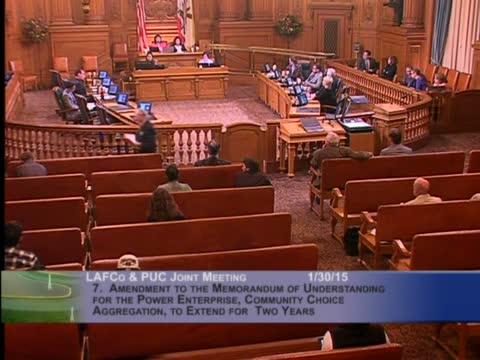
At the Jan. 30 joint meeting LAFCO moved and accepted the InterNex study on Clean Power SF by unanimous consent and approved a no‑cost two‑year extension of its memorandum of understanding with the SFPUC to continue collaborative work.
The Local Agency Formation Commission voted on two formal items related to Clean Power SF during a joint session with the San Francisco Public Utilities Commission on Jan. 30.
Accept InterNex report: Commissioner Campos moved to accept the InterNex local build‑out report and Commissioner Cruz seconded. The chair announced the item moved forward to accept the report "without objection," indicating approval by unanimous consent. The report will inform SFPUC and LAFCO next steps on rate‑setting, procurement and implementation planning.
MOU extension: Commissioners approved a no‑cost two‑year amendment to the memorandum of understanding between LAFCO and SFPUC, extending joint duties and staff collaboration on the community choice aggregation program. The motion to direct staff to enter into the MOU amendment was moved and seconded on the record and the chair announced the item passed.
How the actions matter: Acceptance of the InterNex report is a formal acknowledgement of the study’s findings and clears a procedural step that allows staff to use the report in developing an implementation plan. Extending the MOU preserves the interagency coordination that LAFCO and SFPUC staff said has been essential to prior study and outreach work.
What wasn’t recorded: The transcript records motions, seconds and the chair’s announcement that the items passed; it does not record a roll‑call vote tally for either item. The meeting record shows follow‑up direction for staff to return with timelines, rate scenarios and contracting recommendations.