Get Full Government Meeting Transcripts, Videos, & Alerts Forever!
Get email alerts on the Public Comment And Accountability topic
No spam. Unsubscribe anytime.
Public commenters accuse SFPUC of excluding community; commissioners and staff defend aide Emilio Cruz
Summary
Community speakers accused SFPUC leadership of excluding Bayview Hunters Point residents from community-benefit opportunities and said a staff member expected unpaid community labor; Emilio Cruz responded and commissioners publicly defended him, urging future comments focus on issues rather than individuals.
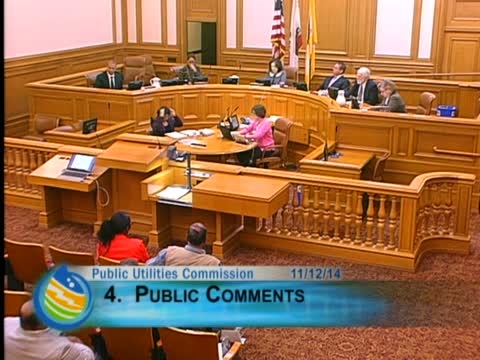
San Francisco — At a November 2014 special meeting of the San Francisco Public Utilities Commission, community speakers sharply criticized the commission’s handling of community benefits and contracting and a tense exchange followed between speakers and staff.
Ms. Lewis, speaking during the public-comment period, alleged that SFPUC leadership had “continued the legacy of double standards” and accused senior staff of telling the Black community it must participate in projects “at our own expense.” She said a recent message from an SFPUC official, referenced in her remarks, signaled that “the SFPUC would be more than happy to receive free labor” and asked the commission to audit compliance with mitigation commitments and to provide timelines for six digesters.
Emilio Cruz, who addressed the commission in his personal capacity and who later appears in the meeting as an agency assistant general manager, responded at length. Cruz said his remark had been intended to distinguish between paid contractors and unpaid advocates and defended the integrity of public contracting processes. He said, “Advocates are not paid contractors. Advocates are there because of what they believe in,” and denied any intent to demean community members. Cruz also told the commission, “if you believe in a word that she said I will gladly publicly submit my resignation today,” a statement the commission used to underscore the seriousness of the exchange.
Several commissioners and community members publicly supported Cruz at the meeting. One commissioner moved and a colleague seconded a short statement of confidence, calling the personal attacks “unnecessary,” while other speakers from the Bayview community offered apologies for the tone of the exchange and affirmed Cruz’s longstanding service.
The commission’s chair and other members asked that future public comment be topic-focused rather than framed as personal attacks. A commissioner requested a short staff memo clarifying what the commission can and cannot do with respect to public comment under open-meetings rules.
The meeting record shows the dispute unfolded during the public-comment period and that no formal personnel action followed the exchange; commissioners instead used the floor to defend staff, request clarity on public-comment procedures and urge constructive engagement going forward.