Get Full Government Meeting Transcripts, Videos, & Alerts Forever!
Get email alerts on the Environment Soil Remediation topic
No spam. Unsubscribe anytime.
SFPUC approves Pacific Rod & Gun Club soil cleanup, authorizes request for $9.5 million supplemental appropriation
Summary
The San Francisco Public Utilities Commission adopted a mitigated negative declaration and mitigation monitoring program for lead-shot and petroleum hydrocarbon cleanup at the Pacific Rod and Gun Club, and authorized the general manager to seek a $9.5 million supplemental appropriation from the Mayor and Board of Supervisors.
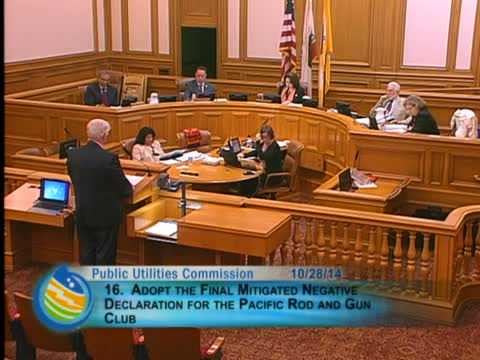
The San Francisco Public Utilities Commission on Oct. 28 adopted a final mitigated negative declaration and associated mitigation monitoring and reporting program for the Pacific Rod and Gun Club upland soil remedial action project and authorized the general manager to request a supplemental appropriation of $9,500,000 from the mayor and Board of Supervisors.
Assistant General Manager for Water Steve Ritchie told the commission the cleanup targets lead shot deposited at the site “between basically 1934 and 1994” and petroleum hydrocarbons from historic target use. Ritchie said the cleanup area expanded after detailed on‑the‑ground surveys identified additional contaminated areas closer to waterways and that an ecological risk assessment submitted to the Regional Water Quality Control Board indicates submerged lead appears to be “unavailable to receptors” at this time.
Ritchie acknowledged increased cost largely reflects the larger area now slated for remediation and said project staff will continue limited additional investigation of underwater lead where needed. Project manager Obi Nzvedi was present for the presentation and acknowledged staff work to keep the project on schedule.
Two members of the public spoke. David Sincotta, representing the Pacific Rod and Gun Club, asked that club members be included in identification, removal and storage of historic club structures and features and said the club remains supportive of cleanup work. A tenant and Lake Merced advocate urged the commission not to allow a lease renewal for the club prior to cleanup and opposed any arrangement that would postpone remediation.
Commissioners moved and seconded approval; the motion carried by voice vote.
The commission’s action establishes the environmental clearance and the monitoring program needed to proceed with remediation. The staff presentation and public comments indicated ongoing coordination with the Regional Water Quality Control Board on risk assessment findings; the item also includes staff direction to incorporate historical‑resource mitigation measures for club structures as requested by the club.
Next steps: staff will seek the supplemental appropriation from the mayor and Board of Supervisors and continue technical coordination with regulators and stakeholders on detailed remedial design and historical‐resource mitigation.