Get Full Government Meeting Transcripts, Videos, & Alerts Forever!
Get email alerts on the Infrastructure Tunnel Construction topic
No spam. Unsubscribe anytime.
SFPUC reports 65-foot steel lining buckle on Overton Tunnel; repairs under way, 2–4 month delay estimated
Summary
SFPUC staff reported a 65-foot rupture of steel tunnel lining on the New/Overton Tunnel caused by high groundwater pressures; an independent investigation is under way, the damaged section has been removed and repairs could delay construction by an estimated two to four months.
The San Francisco Public Utilities Commission was briefed on a construction setback for the New/Overton Tunnel after staff reported that a 65-foot length of steel lining buckled during the overnight shift on Aug. 27.
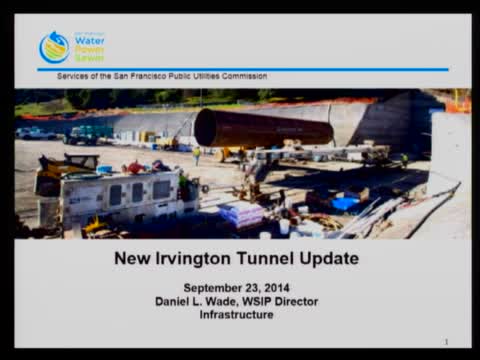
Dan Wade, project director for the Water System Improvement Program, told the commission that the buckled segment was located about 8,200 feet downstream from the Alameda West Portal in one of the deepest portions of the alignment where high groundwater inflows and pressure were encountered. Wade said the left side of the steel lining "actually buckled into the tunnel several feet," and showed photos to the commission that staff said show a broken weld and groundwater pouring into the tunnel.
Wade said crews have removed the damaged 65-foot section and engaged an independent third-party consultant to investigate the cause. The team is drilling through lining in about 2,500 feet of adjacent tunnel where similar high groundwater inflows were observed and checking grout and groundwater conditions to verify the liner's integrity. He said the contractor and design team are developing a detailed repair plan and procedures that will be subject to final designer review.
"We're currently investigating the cause of the pipe buckling using an independent third party consultant," Wade said. "We're developing a detailed repair plan and the procedures are being developed by the contractor with recommendations from the design team." He added that the project team expects to begin repairs in the damaged section this week.
Staff characterized the incident as serious but limited in scope relative to the full alignment; the presentation noted the installed liner exceeds 18,000 linear feet and the damaged 65-foot segment represents a fraction of that total. Wade said the current construction delay estimate is two to four months and cautioned that returning the tunnel to service this year "will depend upon the results of our investigations." He emphasized that teams are working around the clock "to expedite the repairs, without compromising quality."
Commissioners pressed staff on whether nearby sections face similar risk and whether recent regional groundwater changes could have contributed. Wade reiterated that historically this alignment has experienced high inflows during prior tunnel construction and that the investigation will determine if construction techniques or localized groundwater pressures played the decisive role. He said staff has not seen a recent increase in groundwater pressures in that area that would explain a systemic change.
The commission did not take formal action on the presentation beyond requesting staff to keep the board apprised of investigation results and schedule impacts.