Get Full Government Meeting Transcripts, Videos, & Alerts Forever!
Get email alerts on the Wastewater Management topic
No spam. Unsubscribe anytime.
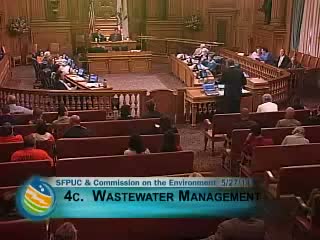
SFPUC outlines $2.7B Phase 1 sewer plan, $7B program total and strategies to manage changing flows
Summary
SFPUC wastewater staff described how San Francisco's combined sewer system handles flows from 80M gpd in dry weather to nearly 600M gpd during storms, presented a $2.7 billion Phase 1 sewer improvement program (part of a roughly $7 billion total plan), and discussed green infrastructure pilots and resource recovery including biogas generation.
Tommy Moala (assistant general manager for wastewater at the SFPUC) presented the utility's assessment of the sewer system and the capital work planned to address aging assets and climate impacts.
Moala emphasized the city's combined sewer system, which carries both sanitary sewage and stormwater, and the resulting operational challenge of changing flows: "We can go from normal dry weather flow from 80,000,000 gallons in all our treatment plants to almost 600,000,000 gallons within a matter of—before within an hour," he said, underscoring the need for both gray infrastructure upgrades and green infrastructure to reduce stormwater inputs.
He described Phase 1 of the Sewer System Improvement Program—budgeted at about $2.7 billion—and said later design work and additional sites could bring the program to nearly $7 billion. The program uses a triple-bottom-line approach, he said, and includes a $57 million set of early green-infrastructure pilot projects across San Francisco watersheds to test technologies before larger deployment.
Moala also outlined resource-recovery opportunities: the Southeast Treatment Plant currently runs a 2.25 megawatt generator on captured biogas and other sites have engines producing additional power. As the treatment plants are modernized and new feedstocks are added, the PUC expects biogas capture and beneficial use to increase, potentially producing electricity or vehicle fuels.
Commissioners focused questions on operational consequences of reduced water flows (less conveyance in some buildings), on costs and maintenance trade-offs for green vs. gray solutions, and on the magnitude of biogas electricity potential. Moala said design work and environmental review are underway and the agency will refine alternatives and cost estimates.
Why it matters: the program targets resilience to seismic risk, aging infrastructure and climate-driven higher tides and storm flows; it will be a major factor in SFPUC rates and capital planning in the years ahead.
Next steps: further design for Phase 2, testing of pilot green-infrastructure projects, continued resource-recovery analysis, and public outreach about rate and level-of-service impacts.