Get Full Government Meeting Transcripts, Videos, & Alerts Forever!
Get email alerts on the Language Access topic
No spam. Unsubscribe anytime.
SFPD unveils training video and expands language‑access efforts for victims with limited English
Summary
The Police Department and community partners showed a new training video and reported department data on bilingual officers and language‑line use; advocates hailed the work as improving domestic‑violence and elder‑abuse investigations for limited‑English speakers.
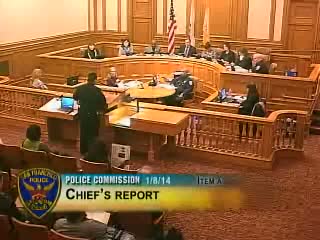
San Francisco — The Police Department on Jan. 8 presented a new training video and a package of language‑access improvements aimed at better serving limited English proficiency (LEP) residents and victims.
Officer Chan, who led the effort, said the department now identifies 451 officers with a foreign‑language ability across the force, and that language line or certified translators were used 2,217 times in the past year. He said Spanish was the most requested language (1,138 uses), followed by Cantonese (392) and Mandarin (187).
The training video shown to the commission illustrated domestic‑violence and elder‑abuse scenarios in which language barriers impede accurate investigation and can lead to wrongful arrests. The presentation emphasized Department General Order 5.2, which requires officers to seek bilingual officers or qualified interpreters and to use language‑line services when necessary.
Community partners praised the collaboration. Beverly Upton of the San Francisco Domestic Violence Consortium said the video and translated materials will help advocates and 25,000 survivors served annually. Lisa Hoffman of the city’s Division of Emergency Communications described work to make emergency protective orders and core forms available in four core languages so victims can receive documents in their language.
Commissioners commended the collaborative approach and asked for continued focus on certification and on making bilingual officers more available in the field. The department noted it is rolling out station‑level materials, translating frequently used forms, and creating lists so dispatch can identify certified officers quickly.
The presentation concluded with the commission and community partners agreeing to continue monthly LEP working‑group meetings, additional PSAs training, and further outreach.