Get Full Government Meeting Transcripts, Videos, & Alerts Forever!
Get email alerts on the Puс Budget Hechy topic
No spam. Unsubscribe anytime.
PUC: Hetch Hetchy power faces a fiscal cliff as new PG&E and regulatory costs bite
Summary
San Francisco’s Public Utilities Commission heard staff warn that rising PG&E transmission charges, new NERC/WECC compliance costs and a costly Mountain Tunnel fix create a multi‑year shortfall that will require a mix of rate changes, bonds, new customers and program cuts to close.
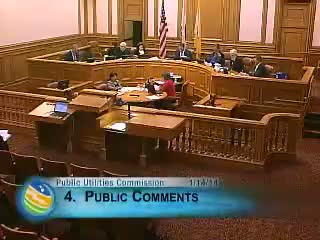
The San Francisco Public Utilities Commission spent much of its Jan. 14 budget workshop examining a growing funding gap in the Hetch Hetchy Water & Power enterprise and options to close it.
General Manager Harlan Kelly and Assistant General Manager for Power Barbara Hale told the commission the PUC’s portion of the overall budget is about $185 million of an $873 million PUC budget, with roughly $149 million attributed to power operations and $36 million to water. Staff said a previously adopted 10‑year capital plan and financial plan was balanced under older assumptions, but three new, material pressures have substantially changed the outlook: higher charges from PG&E for transmission and distribution; more costly compliance with mandatory reliability standards imposed by the North American Electric Reliability Corporation (NERC) and the Western Electricity Coordinating Council (WECC); and a re‑scoped Mountain Tunnel project upcountry that could require a bypass construction rather than a multi‑year relining.
Hale described modeling that shows a range of scenarios. In a “do‑nothing” scenario the enterprise’s reserves begin to decline sharply in year three; staff estimates new PG&E‑related costs add roughly $20 million a year in operating pressure and that the Mountain Tunnel alternatives add hundreds of millions on the capital side. NERC/WECC compliance and critical infrastructure protection work were presented as a two‑year implementation cost (roughly $5.8 million and $4.4 million in the staff presentation) with continuing ongoing obligations thereafter. A separate transmission‑line clearance exercise identified about 300 discrepancies requiring remediation; staff projected an order‑of‑magnitude remediation estimate of about $30 million.
One major engineering option for Mountain Tunnel — a bypass for the most degraded upper miles — raised the estimated program cost from earlier relining estimates (roughly $100–$115 million in past materials) to several hundred million dollars in the current 10‑year capital plan. Assistant General Manager for Water Steve Ritchie told commissioners the alternatives analysis showed rising probability of failure over the next two decades, and staff characterized a catastrophic tunnel failure as a potential loss of that delivery conduit for “approximately six to nine months,” with correspondingly serious impacts on upcountry water delivery and Moccasin powerhouse generation.
Staff offered multiple categories of response rather than a single fix: pursue new commercial customers and negotiated service agreements (examples cited include Transbay/Transit Center, Hunters Point and other development sites), increase general fund or enterprise rates (staff noted previously adopted incremental general‑fund rate increases and urged caution about the timing and magnitude), issue revenue bonds where capacity exists and consider general obligation bonds to fund citywide benefits such as consolidated streetlights. Staff also flagged opportunities to reduce costs and to protect reserves in good years rather than spend down surplus. The presentation included an example: assuming $100 million of GO bonds for some shortfalls would cost a typical property owner roughly $20 per year as an order‑of‑magnitude figure.
Commissioners pressed staff for more detail on a number of follow‑ups: a clearer “eleventh year” list of deferred projects so the commission can track long‑tail liabilities; a more explicit accounting of how energy efficiency funding reductions (including GoSolarSF) have affected long‑term planning; a breakdown of candidate new customers and the timing of associated upfront capital costs; and an analysis of the Newark‑to‑San Francisco transmission path and its potential to reduce wheeling costs. Staff agreed to present those scenarios and more detailed analytic dashboards in future workshops and to provide quarterly status updates so the commission and public can track reserve balances and actions.
Why it matters: staff said the two‑year budget before the commission is balanced on paper, but it erodes reserves quickly and does not address the new projected costs that create the “fiscal cliff.” The commission must weigh tougher choices — new revenues, new debt, reallocation of city general‑fund support and potential cuts to nonessential programs — against the risks of deferring major capital work and failing to meet mandatory reliability standards.
The commission did not adopt a single comprehensive remedy at the workshop; instead, commissioners asked staff to return with more detailed scenarios, cost/benefit analyses on program trade‑offs (including GoSolarSF and energy efficiency), and options to accelerate or delay segments of Mountain Tunnel work pending conceptual engineering and funding choices. The PUC scheduled follow‑ups in the coming months and asked staff to provide a written memo on potential CPUC/CPUC‑administered funds and Community Choice Aggregation revenue scenarios as part of the broader revenue toolbox.
The presentation concluded with staff reiterating that multiple, concurrent approaches will be needed to avert the projected reserve shortfall and to meet both regulatory and capital obligations.