Get Full Government Meeting Transcripts, Videos, & Alerts Forever!
Get email alerts on the Clean Power Rate topic
No spam. Unsubscribe anytime.
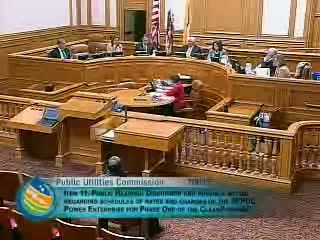
SFPUC amends Clean Power not-to-exceed rate to 11.5¢, schedules further labor talks
Summary
The San Francisco Public Utilities Commission voted to amend a not-to-exceed rate for its Clean Power CCA from 11.9¢ to 11.5¢ and directed staff to continue negotiations with labor, with the item to return to the commission by mid-August.
The San Francisco Public Utilities Commission on Wednesday moved to amend the not-to-exceed rate for phase 1 of its Clean Power Community Choice Aggregation (CCA) program from 11.9¢ to 11.5¢ and directed staff to resume talks with labor representatives before the next review.
Commissioner (speaker 8) brought the motion to place the resolution on the table and then proposed the 11.5¢ amendment, saying the change was intended to align the city’s offer with a recommendation from LAFCO. Nori Ambrose of the City Attorney’s Office advised that the commission needed a motion and second to hear and then amend the item; the commission moved and seconded that procedure.
The amendment’s proponents told the commission that a lower not-to-exceed cap would make the city’s Clean Power option easier for consumers to compare with PG&E’s green tariff, increasing buy-in. ‘‘Reducing it to 11.5, or lower, is both critical to buy-in and also an easy step to take,’’ said a supporter from the San Francisco Bay chapter of the Sierra Club. Other advocates, including the Local Clean Energy Alliance and labor supporters, urged a lower cap and highlighted potential regional examples such as Sonoma Clean Power’s procurement process.
Opponents and cautionary commenters raised two main concerns: that the SFPUC lacks the scale and historical experience of PG&E and that lowering the cap without clear empirical guarantees about energy unit quality could create future problems. An unidentified public commenter said the city ‘‘cannot’’ match PG&E’s 105 years of experience and asked for ‘‘empirical data, not just reduce the amount.’’
Several speakers also argued the CCA rollout should include labor protections and opportunities. A public commenter and labor advocate urged the commission to pursue project labor agreements and to structure energy-efficiency programs so they can help finance local job creation. ‘‘If you build a big enough citywide energy-efficiency installation program ... we can do a PLA, we can put union labor to work,’’ one speaker said.
After public comment, the commission voted on the matter. The record shows the commission adopted the amendment and later recorded a roll tally of four ayes and one no on the motion as presented. The commission also approved a motion to continue the item for further staff-labor consultation, directing staff to return no later than Aug. 13 (with Aug. 23 noted as an alternate target).
The commission’s chair emphasized the amendment was a cap-setting step and ‘‘does not mean that the entire program is going to be launched or approved at this time.’’ The item will return for further consideration following the directed meetings with labor and additional procurement work.
Next steps: staff will meet with labor representatives and return the matter to the commission by mid-August for further action and any final vote on program launch or related resolutions.