Get Full Government Meeting Transcripts, Videos, & Alerts Forever!
Get email alerts on the Ssip Digesters topic
No spam. Unsubscribe anytime.
SFPUC posts digester project timeline, pledges community outreach and training
Summary
SFPUC staff introduced an online Sewer System Improvement Program timeline and Southeast Plant biosolids digester history, saying detailed documents and outreach materials will be posted; public commenters pressed for documentation of workforce training, outfall integrity and methane impacts.
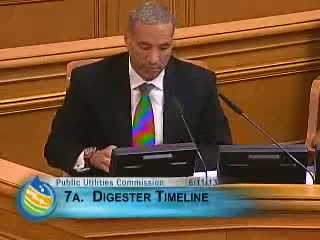
San Francisco Public Utilities Commission staff on March 26 unveiled a draft online timeline for the Sewer System Improvement Program (SSIP) and the Southeast Plant biosolids digester project, and said a more detailed archive of meeting records and supporting documents will be posted for public review.
Lehman Abrams, a program management consultant, told the commission the SSIP history and the digester timeline are now available on the SFPUC website and that the materials identify major milestones dating back to 1952. Abrams highlighted key program milestones including the transfer of the Clean Water Enterprise in 1996, voter approval of Proposition H in 1998 and the sewer system master planning effort from 2004–2010, and said design‑engineering firms were selected by the commission on May 28.
The commission and staff emphasized the timeline is a draft and will be continually updated. "We will continually update this information," Abrams said, and staff committed to posting a more detailed dataset that includes meeting dates and task‑force records.
Public commenters pressed staff to make clearer the local benefits tied to past projects and to state how community workforce training will be included in future mitigation. Mr. DeCosta asked the commission to document what career‑level certification programs were offered at the 1800 Oakdale facility when it opened, noting that prior programs provided training that led to union jobs and certificated careers. "When we built it, we had certified courses… you could be a registered nurse, you could be a master chef," DeCosta said, and he urged staff to archive those records and explain plans to revive similar training.
DeCosta also raised infrastructure integrity questions tied to older outfalls and force mains (including a force main under Pier 80), and asked for details on mitigation or inspection work. He asked the commission to examine historical methane emissions linked to digesters and to apply a precautionary approach to community health and environmental risks.
Staff acknowledged the requests. The general manager and consultants said the online timeline will include supporting documents and that staff will follow up on specific infrastructure questions. The commission did not take a formal vote on SSIP policy at the meeting; the presentation and timeline posting were presented as a staff update and draft for public review.
The commission asked staff to ensure the timeline and related documents are easily accessible to the public and include the documentary evidence that underpins listed milestones. Next steps include posting the detailed project records online and scheduling any follow‑up briefings the commission requests.
Ending: The SSIP timeline remains a draft and staff said they will supply more detailed records and follow up on the specific requests about workforce training, outfalls and methane risk during subsequent briefings and online updates.