Get Full Government Meeting Transcripts, Videos, & Alerts Forever!
Get email alerts on the Use Of Force topic
No spam. Unsubscribe anytime.
San Francisco police withdraw TASER pilot after review; commission to keep exploring less-lethal options
Summary
The SFPD withdrew its request for a TASER pilot at the Police Commission's April 10 meeting, citing restrictive policy constraints that would limit effective evaluation. Commissioners praised the review process and said the commission will continue studying alternatives and oversight measures.
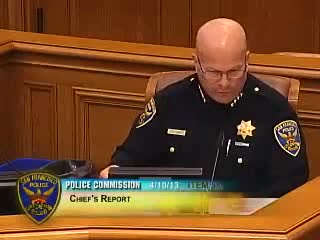
The San Francisco Police Department withdrew its proposal for a TASER pilot during the Police Commission's April 10 meeting, the department's chief told commissioners, saying policy constraints would likely prevent officers from using the devices often enough to evaluate a pilot.
Chief (identified in the transcript as the department chief) described a recent review of TASER deployment policy that resulted in numerous restrictions — including bans near traffic, on elevated areas and around certain vulnerable populations — and concluded the constraints made a pilot impractical. "The constraints put on the officers are so onerous that they would be reticent to use the TASERs at all," the chief said, and he asked that the department's request for a pilot be withdrawn.
Commissioner Turman, who served on the panel that examined TASERs, told the commission the item before the body that evening was a discussion of process rather than an action item and described a broad review of scientific research, policy proposals and public comment. Turman said the panel and the chief agreed there is a gap in the department's use-of-force toolkit and that the commission should continue searching for effective, less-lethal options, even if the current TASER model is not adopted now.
Other commissioners praised the collaborative process, noting community meetings held across neighborhoods and iterative policy drafting that incorporated public feedback. Commissioner Loftus commended the chief and the panel for listening and revising the policy as community input arrived.
Public comment that evening included speakers urging stronger enforcement in the Tenderloin and others urging continued study of less-lethal tools. The ACLU's Makayla Davis later commended the commission and chief for an open and educational process.
The commission did not take a formal vote on TASERs that night; the chief withdrew the department's request and commissioners said they would continue to study less-lethal options and related oversight policies. Future steps described in the discussion included further committee analysis, continued public engagement and incorporation of scientific and policy research into any future recommendation.