Get Full Government Meeting Transcripts, Videos, & Alerts Forever!
Get email alerts on the Sewer System Improvement Program topic
No spam. Unsubscribe anytime.
SFPUC outlines sewer program steps after digester failures, pledges community outreach
Summary
The San Francisco Public Utilities Commission updated the public on the Sewer System Improvement Program, saying two digesters at the Southeast Water Pollution Control Facility are not functioning and that staff will stabilize existing equipment while advancing an $80 million new digester project and other Phase 1 work. Staff also pledged expanded neighborhood outreach and a revived community digester task force.
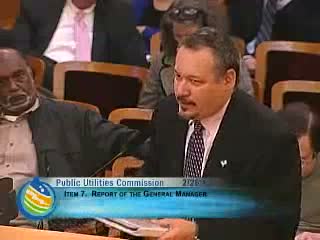
The San Francisco Public Utilities Commission on Monday received a detailed update on the Sewer System Improvement Program (SSIP), including immediate stabilization work for aging digesters and staffing, contracting and outreach plans for Phase 1 implementation.
Assistant General Manager for Infrastructure Emilio Cruz and Program Director Karen Kubik said two digesters at the Southeast Water Pollution Control Facility are currently not functioning and that their roofs are "horribly corroded," prompting an emergency contract and a $50,000,000 stabilization allocation within SSIP to keep existing equipment operating until replacements are proven. Kubik told commissioners an $80,000,000 biosolids digester project is planned as part of Phase 1 and that RFPs for design services will be issued in the near term.
"We have actually biosolids that sit around the ring of the digesters," Kubik said, describing odors and operational risks at the plant. Commissioners stressed urgency and asked for a private briefing on the technical details; staff agreed to provide a more detailed digester briefing.
The presentation outlined Phase 1 priorities beyond digesters: green infrastructure pilot projects (one per watershed), the Central Bayside System Improvement Project to address flooding and stormwater control in the Bayside community, and grit and odor‑control upgrades. Staff said the capital plan includes $272,000,000 for grid and odor control upgrades and that some construction for those efforts will follow planning and environmental review steps; larger digester construction will require a more extensive environmental review and later approvals.
Commissioners and multiple public commenters from Bayview and Southeast neighborhoods raised historical concerns about siting and outreach. A public commenter who identified community ties said the Southeast sector has been "adversely impacted" for decades and urged meaningful consultation with long‑impacted residents rather than remote decision‑making. Staff committed to reinstituting the digester task force, including neighborhood participants, and to supporting an oral history project in the Bayview so community experience is recorded and considered.
Kubik described outreach tactics that staff are already using — participation at community events, bike and plant tours, a children's curriculum and online engagement tools (sfwater.org with an SSIP portal) — and said public workshops for green infrastructure will begin in spring. Commissioners asked about expected construction impacts such as truck traffic, street staging and pedestrian safety; staff said those issues will be addressed in traffic and environmental mitigation plans prepared with other city agencies.
On contracting, staff described a range of delivery models (professional services, alternative delivery, design‑build) and said they are seeking to maximize local business and LBE participation. The implementation plan presented resource loading assumptions that rely on a mix of consultant and city staff roles during planning, design and construction phases.
The Commission did not take formal action on SSIP at the meeting; staff said they will return with a risk mitigation plan, additional briefings and quarterly status updates to the Commission.
Next steps: staff will issue design RFPs in the near term, advance emergency stabilization work for failing digesters, continue CEQA scoping and return to the Commission with more detailed schedule and mitigation measures.