Get Full Government Meeting Transcripts, Videos, & Alerts Forever!
Get email alerts on the 8 Washington topic
No spam. Unsubscribe anytime.
PUC recommends approval of 8 Washington ordinance, amid notice and geotech concerns
Summary
The San Francisco Public Utilities Commission voted to recommend CEQA findings and forward an ordinance affecting sewer easements tied to the 8 Washington development to the Board of Supervisors, after lengthy public comment about notice, a consultant geotechnical report and protections for PUC infrastructure.
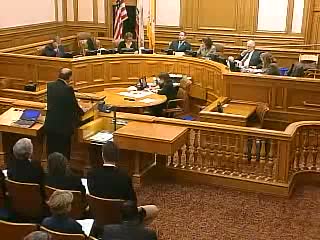
The San Francisco Public Utilities Commission on Feb. 27 approved a resolution recommending that the Board of Supervisors adopt an ordinance to modify and relocate sewer easements related to the 8 Washington development, while directing staff to negotiate a utilities agreement that will protect city infrastructure.
Deputy General Manager Michael Carlin told the commission the action before members was procedural: the Port of San Francisco, as sponsor, is seeking approvals that would allow some revocations and relocations of easements while preserving and protecting sewer infrastructure. "What you're doing today is actually, you're recommending for approval an ordinance that would actually change some easements and, vacate some easements that we actually have for our sewer project," Carlin said, adding that any final action must be ratified by the Board of Supervisors.
The matter drew dozens of public speakers. Supporters including the San Francisco Housing Action Coalition, SPUR and construction trade representatives said the project would convert a surface parking lot into housing and public space and would contribute about $11 million for housing affordability. Tim Cohen of the Housing Action Coalition said the proposal "takes a surface parking lot on some of the most valuable land in Northern California and puts it into a use that brings enormous financial and design benefits to the city." Advocates urged the commission not to delay routine technical approvals.
Opponents and nearby residents raised notice and technical-safety concerns. Aaron Peskin of Neighbors to Preserve the Waterfront read sections of an engineering report obtained by the PUC consultant (AECOM) that estimated potential ground movement of several inches and warned of susceptibility of sewer structures to cracking. "These utilities are susceptible to damage from ground movements and cracking in the concrete structures," Peskin said, reading from the report. Other speakers said they had not received environmental-notice materials and asked whether amending CEQA findings at the PUC hearing required additional notice.
City Attorney and planning officials responded that the Planning Department issued an addendum to the EIR on Feb. 22 and distributed it to parties on the notice list; the PUC's hearing notice and posted materials complied with the commission's typical noticing practice, they said. Noreen Ambrose, City Attorney's Office, told commissioners that the PUC's action is to recommend conditions to the Board of Supervisors and that the Board has final authority over sale or transfer of city real property. "What this commission is doing ... is recommending to the Board that the Board include in its approval of the site plan and the movement of these easements a requirement that that easement doesn't move unless your agreement with the developer is executed," Ambrose said.
Commissioners pressed staff to ensure that the forthcoming utilities agreement directly addresses the engineering issues raised, and that the same consultant evaluate modified design scenarios. Brian Henderson, wastewater engineering manager, told the panel that staff and consultant teams had reached technical disagreements but that those would be addressed in the utility-agreement negotiations that must return to the PUC for approval.
After discussion, a motion to move the item and recommend the CEQA findings to the Board was made and seconded and the commission recorded the motion as carried.
Next steps: staff will continue negotiations with the Port and the developer on utility protections and will return to the PUC with a utilities agreement and more detailed design review before any easement relocations or construction drawings are finalized.