Get Full Government Meeting Transcripts, Videos, & Alerts Forever!
Get email alerts on the Public Safety topic
No spam. Unsubscribe anytime.
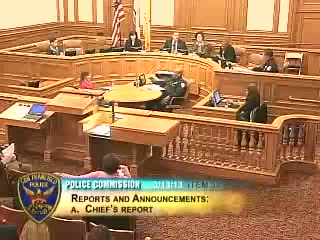
S.F. Police Commission highlights surge in iPhone robberies, presses carriers and manufacturers on 'bricking'
Summary
The San Francisco Police Commission on March 13 heard SFPD data showing a rise in robberies for cell phones and discussed technical fixes, including carrier-level blacklisting and a manufacturer-led "bricking" standard that officials said could reduce the devices' resale value.
The San Francisco Police Commission heard a detailed presentation March 13 on a recent rise in robberies targeting smartphones and explored technical and enforcement responses aimed at reducing the secondary market for stolen devices.
Captain Joe McFadden of the SFPD's Major Crimes Unit told commissioners that in recent months the department has seen hundreds of electronic-device thefts, with many iPhones resold within 20 to 25 minutes of being stolen. "These guys have gone around and they were responsible for numerous robberies regarding these iPhones," McFadden said, summarizing patterns his unit has traced to areas south of Market.
Why it matters: Commissioners said thefts of high-value devices are producing violent robberies that endanger residents and drain police resources. President Mizuho framed the commission's concern around both public safety and the secondary-market economics that make iPhones attractive targets.
What the SFPD proposed and found: McFadden outlined a three-part effort—education, targeted enforcement and technology partnerships. He described daily "big 19" briefings to identify patterns and a Muni task force that pursues rapid-response arrests. On technology, McFadden said carriers (AT&T, Verizon, Sprint, T-Mobile) currently offer tracking and blacklisting services, but those measures can be defeated once a device is turned off or reactivated abroad. "They have these capabilities for phone tracking and for bricking," he said, adding that criminals often turn devices off immediately, which hampers tracking.
On "bricking": McFadden said carriers and manufacturers are working to make stolen phones inoperable across markets. He described a carrier-proposed "blacklisting" approach that would bind a SIM to a handset, and he relayed that Apple and others have discussed manufacturer-level solutions that could render a device useless even if re-exported. "According to Apple now, they say they may have this up by Christmas internationally," McFadden said, while acknowledging the risk that underground repair and refurbishing markets could bypass some protections.
Community prevention: Irina Chetsova, program director at San Francisco SAFE, described multilingual safety trainings targeted to tech employees and newcomers; SF SAFE provides about 200 safety presentations annually and uses role-play and translated materials to teach people how to reduce their risk.
Next steps: Commissioners asked the department for further briefings and suggested outreach to carriers and manufacturers. McFadden said Lieutenant Jen Jackson is assigned to coordinate SFPD work on bricking and tracking, and he recommended continued public education and targeted enforcement in known resale hotspots.
The commission did not take a formal regulatory action on carriers or manufacturers; McFadden said the department will continue to pursue both enforcement and coordinated technology discussions with industry stakeholders.