Get Full Government Meeting Transcripts, Videos, & Alerts Forever!
Get email alerts on the Calaveras Dam topic
No spam. Unsubscribe anytime.
PUC: Calaveras Dam work progressing but new risks add $6.9M to cost forecast
Summary
PUC staff reported steady excavation at Observation Hill, a newly elevated risk profile including naturally occurring asbestos, a $6.9 million addition to the Calaveras forecast and an independent RW Block audit reviewing costs and schedule for five megaprojects.
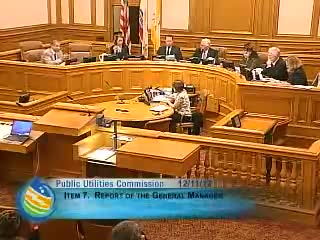
Julie Labonte provided a program update on the Calaveras Dam megaproject and related WESIP activities. She said permits and a CEQA addendum for additional soil-disposal sites are in place, the contractor is averaging about 15,000 cubic yards of excavation per day at Observation Hill, and staff received the first permit approval the day of the meeting.
Labonte warned that naturally occurring asbestos remains a control issue and that two of the program’s previously identified top risks have trended in likelihood. To account for those trending risks, staff added $6,900,000 to the forecasted cost tied to additional excavation under the foundation and extra grouting of the dam foundation. She said staff will seek a first project revision based on program estimates (not the yet-to-be-negotiated change order) on Jan. 22 and later return for a second revision after negotiations conclude.
Labonte also described an independent audit, sponsored by the Revenue Board Oversight Committee (RBAC) and performed by consulting firm RW Block, to examine cost, schedule and remaining contingency across the PUC’s five megaprojects (Calaveras, Irvington Tunnel, Bay Tunnel, Harry Tracy Water Treatment Plant, and the Crystal Springs/San Andreas transmission upgrade). The audit will assess soft costs and project completion assumptions and is intended to identify potential cost efficiencies.
Commissioners asked clarifying questions about the forecast change, schedule impacts and the timing of public notifications required for the first project revision. Staff said the first revision requires a 30‑day notice to suburban customers and that bringing the revision to the commission on Jan. 22 is necessary to maintain program momentum.