Get Full Government Meeting Transcripts, Videos, & Alerts Forever!
Get email alerts on the Police Weapons topic
No spam. Unsubscribe anytime.
Commission outlines public vetting process for 'less‑lethal' weapons after strong public opposition
Summary
Commissioners emphasized that no final decision on TASERs had been made and described a 90‑day vetting process with public meetings; dozens of speakers urged the panel to halt any acquisition and to prioritize training and community consultation.
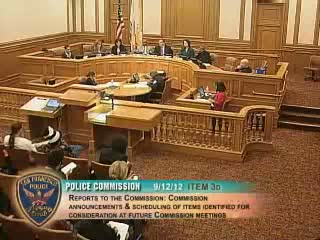
Commission President and commissioners clarified at the Sept. 12 meeting that the session did not present a final procurement decision on TASERs or other less‑lethal options, but rather advanced implementation of a previously passed Police Commission resolution calling for a 90‑day review with public input. Commissioner Turman directly told the public the Commission was not moving forward with deployment without community engagement.
Chief Sir and police staff described a 90‑day working group that had compiled open‑source research on various less‑lethal devices, drafted a model policy drawing on other agencies’ TASER policies and included medical cautions suggested by UCSF clinicians. The Chief said hard copies of the draft policy and appendices were available and pledged to make materials available via the police commission for public review and to schedule community meetings on the matter.
Speakers from community groups and residents strongly urged delay or abandonment of TASER adoption. The Idris Elie Foundation and other speakers said they were compiling city‑by‑city litigation and cost comparisons and cited reported TASER‑related injuries and deaths. Michael Lyon (San Francisco Grey Panthers) and multiple others argued TASERs are often used on unarmed individuals and that training and crisis intervention (CIT) teams should be prioritized over introduction of new weapons. The ACLU and the Center on Juvenile and Criminal Justice asked for thorough consideration of data collection, clarity about past reporting errors, and time to backdate or reconstruct missing arrest data used to analyze disparities.
Commissioners committed to public outreach and scheduled subcommittee and community meetings to allow fuller presentations, receiving commitments from the department to provide draft policies, appendices of alternatives and public meeting dates. Commissioner Loftus and others asked that, as obstacles are identified, staff report back so that the Commission and the Mayor’s Office can support technological or policy fixes.
No procurement or formal policy adoption took place at this meeting; the Commission repeatedly emphasized the process would include significant public input before any decision.