Get Full Government Meeting Transcripts, Videos, & Alerts Forever!
Get email alerts on the Public Safety topic
No spam. Unsubscribe anytime.
Police commission meets in Ingleside after four Sunnydale homicides; officials discuss cameras, outreach and resources
Summary
Commissioners, the acting captain and the housing authority discussed four recent homicides in the Sunnydale housing development, stepped-up police deployments, possible camera installation, and gaps in language access after community members urged more trauma-informed outreach.
The San Francisco Police Commission convened a community meeting in Ingleside on Wednesday to address a recent spate of violence in the Sunnydale housing development, hear updates from police and housing authority officials, and receive community requests for improved outreach and language access.
Acting Captain Lieutenant Greg Lee told the commission that Ingleside Station has approximately 141 sworn members and dedicated housing officers who have been deployed to Sunnydale alongside motorcycle units, the gang task force and a violence reduction team. Lee said the district has seen "four homicides this year" in the Sunnydale development and that the increased presence and community partnerships had "quelled the violence, knock on wood," at least temporarily.
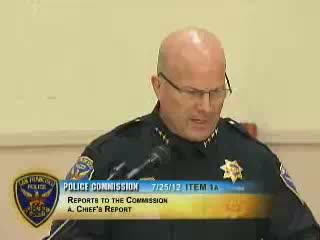
Chief of Police (named in the transcript as Gregory Pizzer) offered a citywide context, saying "non fatal shootings in San Francisco are down almost 10%" while noting homicides have risen in part because a higher share of shooting victims were killed this year. The chief also flagged a rise in property crime of about 6% and described fraud schemes targeting elderly Asian residents.
Henry Alvarez, director of the San Francisco Housing Authority, outlined several steps the authority is pursuing in Sunnydale, including improved lighting, community town halls, education about anonymous tip lines and "the installation of cameras" focused on entrances and exits to avoid surveillance of private areas. Alvarez described Sunnydale in the meeting transcript as roughly "55 acres, about 786 units," and said cameras would be used to capture impartial evidence and to assist investigations when residents are reluctant to testify.
Community speakers repeatedly urged better language access and trauma-informed responses. Sharon Yuda of the Community Leadership Academy Emergency Response Project recommended bringing trauma experts into the conversation and asked the commission to evaluate the ambassadors program; Marlene Tran of the Visitation Valley Asian Alliance pressed for stronger Chinese-language outreach after describing several scam victims she interviewed.
Commissioners asked for more data and follow-up: how many youth live in Sunnydale, the status of homicide investigations and whether arrests have been made. Police officials said all cases were being actively worked and that gang task force and homicide units were cooperating, but they acknowledged that witnesses in close-knit complexes often decline to testify and that some cases "may never be solved through testimony." Officials described a mix of investigative tools they were using, including ballistic testing, DNA, license-plate readers and ShotSpotter.
The meeting also highlighted coordination across city agencies: the chief, housing authority and representatives from the mayor's office and community organizations took part. Residents and community leaders pushed for continued neighborhood outreach, public-notice improvements and translation services so non-English-speaking residents receive timely public-safety information.
The commission did not announce new policy rules at the meeting; its most immediate next steps were to follow up on translation and notification gaps and to continue coordination with the housing authority and community partners. The meeting concluded with a motion to adjourn, which was seconded and approved.