Get Full Government Meeting Transcripts, Videos, & Alerts Forever!
Get email alerts on the Treasure Island topic
No spam. Unsubscribe anytime.
SFPUC adopts Treasure Island agreements despite questions over sea-level financing
Summary
The SFPUC voted to adopt CEQA findings and authorize execution of the Treasure Island development agreements and interagency cooperation agreement, after extensive questioning about sea‑level‑rise financing, Mello‑Roos/CFD funding and future obligations for shoreline protection and utilities.
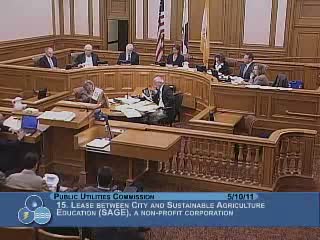
The San Francisco Public Utilities Commission on May 10 approved CEQA findings, the development agreement and the interagency cooperation agreement related to the Treasure Island–Yerba Buena Island redevelopment project, while flagging outstanding questions about long‑term financing for sea‑level‑rise protections and the PUC's role in accepting new utilities.
Michael Kron, deputy general manager, told commissioners the package before them included three parts: adoption of CEQA findings and a mitigation monitoring plan, approval of a development agreement vesting certain developer rights, and authorization for the general manager to execute an interagency cooperation agreement that fixes procedures for infrastructure design, inspection and ultimate acceptance by the city. Michael Timeoff of the mayor’s office summarized the project scope: an 8,000‑unit development (with a 25% floor for affordable housing in current agreements), roughly 300 acres of parks, up to 500 hotel rooms and substantial public benefits including transit investments.
Staff and mayoral office consultants outlined the project's approach to sea‑level rise: initial perimeter improvements and future adaptive measures funded through a project finance plan tied to Community Facilities District (CFD) bonds (Mello‑Roos). Staff estimated initial perimeter upgrades at about $7 million; incremental improvements to protect up to 36 inches of sea‑level rise at about $29.4 million more; and further work to reach 55 inches at an additional $8.8 million. They said elevating all development pads to a 55‑inch protection level now would cost roughly $73 million. The infrastructure the developer will deliver to SFPUC was estimated at about $180 million (wet and dry utilities and geotechnical work over roughly 105 acres).
Commissioners pressed for clearer contractual commitments that would ensure funds collected by the CFD are prioritized for future sea‑level‑rise improvements. Commissioner questions focused on when particular funding tranches would be available, who has legal authority to trigger work, and whether the financing-plan language created an enforceable obligation to act. Staff pointed to financing‑plan language (cited in the meeting and identified by staff as section 2.8) that directs the city to finance future sea‑level‑rise improvements "through the proceeds of the second tranche CFD bonds" and allows financing from first‑tranche bonds if sea levels rise more than 16 inches prior to a conversion date.
Public commenters urged caution and stronger guarantees. Environmental and community advocates warned that new scientific projections and tsunami risk merited stronger protections and expressed concern that the switch from redevelopment financing to an infrastructure financing district reduced the share of tax increment available for affordable housing and potentially local‑hire and community commitments.
Commissioners adopted the resolutions as amended; staff agreed to work on tightening language in the financing plan and related documents to clarify priorities for sea‑level‑rise improvements and to return with specified edits as needed. The vote carried after further procedural edits and an amendment that clarified the terms under which the SFPUC would exercise repayment or acceptance of certain existing infrastructure funds.