Get Full Government Meeting Transcripts, Videos, & Alerts Forever!
Get email alerts on the Water Rates topic
No spam. Unsubscribe anytime.
SFPUC approves wholesale rate increase, adds environmental surcharge
Summary
The San Francisco Public Utilities Commission adopted a wholesale treated-water rate increase to $2.63 per unit (about a 38% rise) and approved an environmental enhancement surcharge framework to apply if deliveries exceed the interim 265 MGD threshold; commissioners added an amendment directing staff to work closely with wholesale customers on transparency and projections.
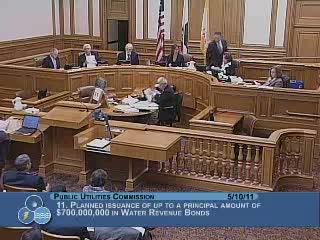
The San Francisco Public Utilities Commission on May 10 approved a rate adjustment for wholesale treated water and put in place an environmental enhancement surcharge that would take effect only if system deliveries exceed the contract trigger.
Todd Reedstrom, assistant general manager and chief financial officer, told the commission the proposed wholesale rate for treated water would rise from $1.90 to $2.63 per unit beginning July 1, closing a projected $50 million shortfall that staff attributed largely to higher anticipated debt service and partial repayment of a long-standing balancing-account receivable. Reedstrom said the proposal assumes wholesale deliveries of about 150 million gallons per day and stages repayment of the balancing account across three years to ease near-term pressure.
Art Jensen of Bosco, representing 26 wholesale agencies, said those customers "concur with the basis for the recommended wholesale water rate adjustment" but asked for closer early coordination on any future rate-structure changes and clearer public explanations of how amounts were calculated.
The commission also adopted an environmental enhancement surcharge (EES) framework, required under the 2009 water supply agreement, that would only be levied if system-wide deliveries exceeded 265 MGD. Staff proposed a three-tier surcharge designed to create incentives for conservation and alternative supplies; Peter Drechmeier of the Tuolumne River Trust and other environmental groups urged narrower tiers so penalties would rise more evenly. Reedstrom and other staff maintained that the proposed tiers are already stronger than many alternatives because the lowest surcharge exceeds the average cost of conservation measures.
Commissioners added an amendment directing the general manager to work closely with wholesale customers as future rates are developed, share projection methodologies and water-record processes, and produce clearer public-facing explanations of rate impacts for typical households. The motion to adopt the amended rate schedule and the EES passed after public comment and debate.
Reedstrom noted an untreated wholesale discount factor for customers that do not receive treatment services — the coastside customer set was described as receiving a $0.23-per-unit discount consistent with existing contract terms.
The vote follows months of work on wholesale demand projections, which staff said have fallen faster than earlier models predicted; through April wholesale deliveries were down roughly 4.7% year‑over‑year. Commissioners and wholesale customers said they expect continued coordination as the new rates take effect and as agencies finalize their urban water management plans.