Get Full Government Meeting Transcripts, Videos, & Alerts Forever!
Get email alerts on the Commission Rules topic
No spam. Unsubscribe anytime.
Police Commission agrees to trial revised meeting schedule after extended debate
Summary
After a lengthy discussion on costs, oversight and community access, the San Francisco Police Commission agreed to a trial to stop meeting the second Wednesday for five months and to emphasize community meetings on fourth Wednesdays when feasible.
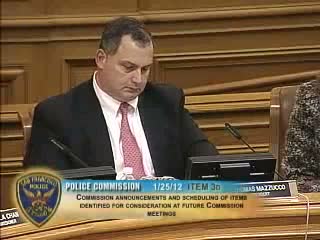
At its Jan. 25 meeting, the San Francisco Police Commission debated a proposed amendment to its rules that would reduce the frequency of regular meetings and formalize quarterly community outreach. Commissioner Slaughter introduced language to meet on the first and third Wednesdays and hold a community meeting on the fourth Wednesday; commissioners then engaged in extended debate over the trade-offs between operational oversight and cost or efficiency.
Commissioner Slaughter argued the Commission can meet its oversight obligations on a reduced schedule and that many commissions meet less frequently: "We are one of the very few commissions that meets every week," he said, urging predictability and efficiency. Commissioner Kingsley and others voiced concern about eliminating too many meeting opportunities for public oversight and the extra staff cost of community meetings. "I don't think we should reduce the number of meetings," Commissioner Chan said, urging caution and proposing an incremental approach.
The body did not immediately adopt a permanent rule change. Instead, commissioners reached a working consensus to try a limited change: eliminate the second Wednesday meeting for a five-month trial period and hold community meetings on fourth Wednesdays where logistics allow. Commissioners emphasized that the schedule remains flexible: meetings can be added with appropriate notice if urgent matters arise, and special or additional meetings can be called with the required public-notice timeline (72 hours). The Commission said it will revisit the trial after the prescribed period to assess whether oversight or public access suffered and to consider formal rule changes.
Why it matters: The schedule affects when the public can address commissioners, how staff resources are allocated, and how the Commission organizes recurring reporting and discipline calendars. Several public commenters told the Commission they would like more consistent advance notice and earlier start times to increase community attendance.
Next steps: The Commission will implement the trial schedule and return in several months to review whether the change should become permanent.