Get Full Government Meeting Transcripts, Videos, & Alerts Forever!
Get email alerts on the Occupy Sf topic
No spam. Unsubscribe anytime.
Occupy San Francisco raid, arrests and policing tactics draw scrutiny at Police Commission hearing
Summary
Public commenters and community groups criticized the police response to the Justin Herman Plaza raid and urged protection of First Amendment assembly rights. The chief defended operational decisions and reported arrest tallies and cost impacts on overtime.
Hundreds of residents, advocacy organizations and Occupy San Francisco supporters used the Police Commission’s Dec. 7 meeting to press the San Francisco Police Department for an accounting of the early‑morning Justin Herman Plaza operation and to urge protections for First Amendment assembly rights.
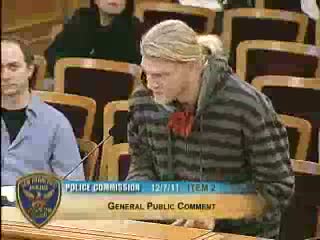
Several public speakers described the raid and its aftermath. Philip Oye, who identified himself with Occupy San Francisco, said he "witnessed on Thursday, December 1, officer Reyes, badge number 614, brutally assault a young woman," and said the woman required stitches. Other speakers said they were detained, zip‑tied or pushed and described problems accessing medical care and inconsistent police handling of detainees.
In his report to the commission, the chief said officers, the Department of Public Works and other city teams participated in the Justin Herman Plaza operation and provided a tally: "There were 86 arrests," the chief said, adding that 79 were described as peaceful and that three officers sustained injuries from assaults during the operation. The chief said officers exercised restraint, that about 10 percent of those arrested accepted homeless‑outreach services on release, and that the operation significantly taxed the department’s overtime budget.
Community groups that spoke during a reopened public comment period included the Chinese Progressive Association, the United Educators of San Francisco, Iraq Veterans Against the War and Jobs with Justice. They asked the commission and mayoral office for a public affirmation that peaceful assembly and protest would be protected in the city and for clearer boundaries about camping, tents and enforcement tactics. "We were part of a process with the mayor's office to ensure that First Amendment rights … would be respected," said a representative of the Chinese Progressive Association, who asked whether actions on the ground represented a change in policy.
Commissioners questioned the timing and tactics of the raid — including the use of barricades and the presence of mounted units — and discussed the balance between enforcing overnight camping rules and facilitating daytime protest activity. Commissioner Petra de Jesus and others said the city should prefer daylight, negotiated transitions when possible; the chief and staff said negotiations had stalled, cited safety incidents during the previous week and defended the department’s operational choices.
Several commissioners asked for a post‑operation accounting: costs in overtime (the chief estimated approximately $400,000 spent up to that night), numbers of detainees requiring medical treatment and whether city negotiations and oversight could be strengthened before future takedowns. The commission did not vote on new policy at the meeting but requested additional follow‑up and reaffirmed that the city protects First Amendment expression while also enforcing local statutes on overnight camping.