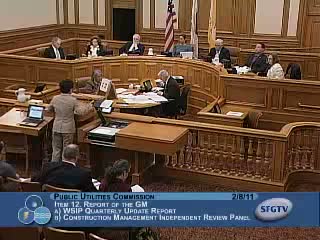
Independent review finds WSIP generally on track despite schedule compression; commission hears quarterly update
Loading...
Summary
SFPUC staff reported progress on the Water System Improvement Program (WSIP), citing $1.8 billion in regional construction activity and program‑level variances with a $175 million forecasted underrun on the regional program; an independent panel praised management and recommended configuration management and continued risk tracking.
The San Francisco Public Utilities Commission received a quarterly update on the Water System Improvement Program (WSIP) and heard an independent review panel’s assessment that program execution is broadly sound even as schedule compression raises risk for the program’s final years.
Julie Lamonte, director of WSIP, reported the quarter covering Oct. 3–Dec. 25, 2010: 29 local projects are complete, regional projects in construction totaled about $1.8 billion, and the program forecast showed an approximate $175 million underrun on the regional program while the local program remained about $31 million over budget. Lamonte noted that two water supply projects account for a substantial share of local project value and that certain projects—Calaveras Dam, Crystal Springs transmission upgrades, and the Harry Tracy water treatment plant—drive significant schedule and cost attention.
Lamonte also enumerated several project‑level challenges: additional scope and costs identified on Bay Division pipeline crossings of the Hayward Fault, additional well stations and manganese treatment for groundwater storage and recovery, archaeological site discoveries requiring mitigation or design changes, and other environmental permitting obligations that increased mitigation and monitoring costs for habitat reserve efforts. She said most cost increases resulted from refined design estimates and additional requirements from resource agencies.
An independent review panel chaired by Glenn Singley (Los Angeles Department of Water and Power) presented its findings: the WSIP team’s organization, procedures and construction management are strong; safety performance has been exceptional; and recommended steps include a formal configuration management plan, continued risk‑management updates, streamlined reporting, periodic management review forums, and contractor involvement in risk identification. The panel cautioned that schedule compression could increase the probability of delays in the program’s final years and urged management attention to resource alignment.
Commissioners welcomed the independent reviews, asked for follow‑up at approximately nine‑month intervals, and asked staff to prepare work plans addressing the program’s three major priorities (critical evaluation of wastewater CIP/SSIP, review of Hetchy power CIP, and portfolio‑level resource planning) ahead of the next budget cycle.
Next steps: Commission asked staff to continue periodic independent reviews, refine risk and configuration management practices, and return with a work plan to address the three priority areas ahead of next year’s budget process.