Get Full Government Meeting Transcripts, Videos, & Alerts Forever!
Get email alerts on the Police Training topic
No spam. Unsubscribe anytime.
Police department schedules first Crisis Intervention Team training, working group warns resources needed
Summary
San Francisco police and a community working group said the first Crisis Intervention Team class following the Memphis model will run Dec. 5'8; department leaders described initial cohorts, a plan for patrol-driven deployment, and a request for modest sustained funding and administrative support.
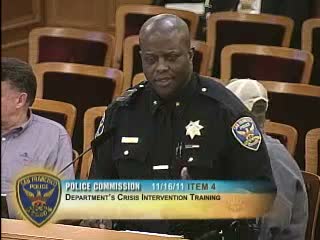
Commander Mikhail Ali, the department's lead on implementing a Memphis-model Crisis Intervention Team (CIT), told the Police Commission the first class is scheduled for Dec. 5 through Dec. 8 at the police academy.
"We will have our first class training that's gonna take place December 5 through December 8 at the police academy," Ali said, adding that the initial cohort will include about six lieutenants, roughly 25 officers and three dispatchers, with a commitment from the Department of Emergency Management to add dispatchers as needed. Ali described the model as "patrol-driven" to build supervisory capacity for crisis response and de-escalation.
Michael Goss and Cecile O'Connor, members of the CIT working group, praised the department's progress but pressed for sustainable support. Goss said the working group has invested "a ton of hours" and expects ongoing monthly training and coordination with guest speakers, lived-experience trainers and de-escalation specialists. He told the commission the program will need administrative coordination and modest funding for trainers to ensure continuity beyond the initial class.
Ali said the department's grant-writing office has identified potential external funding sources for the next fiscal year and that the working group will evaluate the first class before scheduling a second round. He also said the working group is designing a CIT button informed by Memphis's model and anticipates sharing design options with the group.
Commissioners asked about recruitment and incentives. Ali said recruitment involved outreach beyond a bulletin to captains, sergeants and officers in stations with higher rates of crisis encounters and that "there's been a tremendous amount of interest and enthusiasm". On pay or incentives, he said the commission and the Police Officers Association discussed financial incentives; initial plans prioritize personnel who already receive training stipends, such as field-training officers.
Commissioner Chan asked commissioners to attend the informal graduation scheduled for the last day of training, and Chan requested logistical details be circulated to commissioners. Public commenters including Ray Hartz and others supported the training, urging that officers be given more tools to de-escalate and noting potential benefits for both officers and the public.
The commission did not take formal action beyond discussion; commissioners asked staff to provide details on training location, graduation logistics, and the grant-office's funding options. The CIT working group and department representatives committed to return with evaluation results and funding recommendations after the initial class.