Get Full Government Meeting Transcripts, Videos, & Alerts Forever!
Get email alerts on the JTTF MOU topic
No spam. Unsubscribe anytime.
ACLU asks Police Commission for clarity on JTTF MOU and protections for officers
Summary
An ACLU representative asked the San Francisco Police Commission when it would report back on the Joint Terrorism Task Force (JTTF) matter and whether the FBI has provided written assurances so officers assigned to the JTTF can participate in OCC investigations without federal penalty.
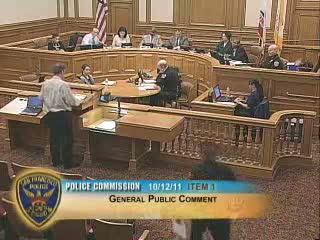
At the Police Commission’s Oct. 12 meeting, John Crewe of the ACLU pressed the commission for a public update on the Joint Terrorism Task Force (JTTF) matter and highlighted a tension he described between federal nondisclosure agreements in an MOU and the city’s complaint-investigation process.
Crewe said the commission had committed five weeks earlier to getting answers from the FBI and to reporting back; he asked whether the FBI had been asked to provide written assurances that officers assigned to the JTTF could comply with the chief’s orders and the OCC’s investigatory requests without risking federal sanction. "Has the FBI been asked if… will they give written assurances to the officers that if they comply with the chief's order and the law in San Francisco, that they will not be subject to federal consequences?" Crewe asked.
Commissioners said they have met with the ACLU and other groups and that a subcommittee (including Commissioner James Slaughter and others) would continue work and bring remaining questions back to the commission. One commissioner reported there is a written commitment from the FBI that members assigned to the JTTF "can perform their duties in the JTTF while abiding by all of San Francisco's policies and orders." The commission said the issue remains properly agendized for continued discussion.
Why this matters: The question touches on overlapping federal and local authorities: if federal agreements prevent officers from participating fully in local oversight processes, complainants may be unable to obtain interviews or records needed for investigations; the commission’s resolution of the issue affects oversight credibility and officers’ legal exposure.
What happens next: The commission’s subcommittee will continue work and return items for full-commission discussion, with commissioners indicating they expect further presentations and a formal report-back on an agreed timeline.
Sources: John Crewe (ACLU) and commissioners’ remarks at Oct. 12, 2011 Police Commission meeting.