Get Full Government Meeting Transcripts, Videos, & Alerts Forever!
Get email alerts on the Ssip Goals topic
No spam. Unsubscribe anytime.
San Francisco PUC endorses long‑term sewer goals, asks staff to plan for increased storm intensity
Summary
The San Francisco Public Utilities Commission voted July 27 to endorse goals and levels of service for a 30‑year Sewer System Improvement Program (SSIP), directing staff to proceed with RFPs, watershed planning and measures to account for future increases in storm intensity and sea‑level rise.
The San Francisco Public Utilities Commission on July 27 endorsed a set of goals and levels of service that will guide a proposed $5.6–$6.8 billion, 30‑year Sewer System Improvement Program.
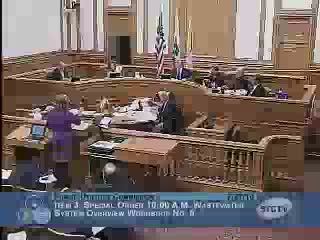
Commissioners voted to adopt a resolution endorsing the SSIP goals after a day of workshops during which staff presented project lists, technical analyses and draft performance standards. Karen Kubik, director of the SSIP, told the commission they were being asked for endorsement of goals and levels of service — not for project adoption — so staff could proceed with project planning, CEQA sequencing, and consultant procurement.
Why it matters: The endorsement sets performance targets that will shape how the city spends on treatment‑plant upgrades, deep‑water outfall rehabilitation, a biosolids digester project, localized flood‑control works and collection‑system renewal and replacement. Staff tied the goals to permit compliance, public‑safety objectives (including a 72‑hour earthquake recovery standard), community benefits for impacted neighborhoods, and climate‑adaptation measures such as siting new infrastructure above projected sea‑level rise.
Major decisions and next steps: The commission added language that directs staff to develop additional levels of service to address possible increases in storm intensity and to propose amendments if warranted. Staff said they will move forward with RFPs for critical early tasks — including the biosolids digester team and channel‑tunnel consultants — and begin watershed‑by‑watershed planning and triple‑bottom‑line analyses to refine the package.
What staff said: Kubik emphasized the distinction between routine R&R (operations, maintenance and renewal) and SSIP capital investments: “We’re not looking today for project adoption, but we’re looking for endorsement with the goals and levels of service,” she said. Staff committed to continued community engagement, especially in neighborhoods near major projects such as the Southeast treatment plant and Treasure Island.
Public input and controversy: Several environmental, neighborhood and watershed groups urged either adoption to allow the program to advance or a brief delay so implementation commitments (maintenance, community benefits, green‑infrastructure funding and environmental justice protections) could be clarified. Clean Water Action asked for explicit language addressing future regulatory changes; community groups pressed for stronger guarantees that local hiring, odor mitigation and park‑improvement benefits would be funded as projects advance.
What comes next: With the goals endorsed, staff will proceed with consultant procurements, CEQA scoping and watershed planning. The commission asked for regular updates tying specific projects to expected rate impacts, mitigation measures, and community‑benefit commitments. The SSIP will be refined as project alternatives and cost estimates are completed and as pilots and demonstrations of new technologies proceed.