Get Full Government Meeting Transcripts, Videos, & Alerts Forever!
Get email alerts on the Southeast Digesters topic
No spam. Unsubscribe anytime.
PUC hears task force report recommending new Southeast digester at existing site with stronger community benefits
Summary
A majority of the Southeast Digester Task Force recommended rebuilding digesters at or adjacent to the Southeast plant, not the Pier 94 backlands, and urged mandatory local-hire goals, apprenticeship training and neighborhood mitigation; the commission adopted a resolution commending the task force and will carry the findings into environmental review.
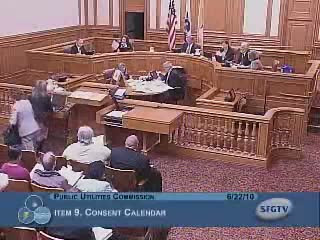
The San Francisco Public Utilities Commission on Tuesday received a detailed, 18‑month review from the Southeast Digester Task Force and voted to commend the citizen group for its work as staff prepares environmental review and design work for a digester replacement project.
The task force report — signed by eight of nine members who participated through February–June review sessions — narrowed 17 candidate locations to two primary options: rebuilding at or adjacent to the existing Southeast wastewater plant, or constructing new digesters at Pier 94. Staff said a digester footprint requires roughly 10 acres and an additional 5 acres if a drying facility is included.
"We have to move forward with this project," said the staff presenter for the task force, noting that the facility at Southeast is structurally aged and cannot meet future Class A biosolids standards without replacement. The report also highlighted structural failures and a recent roof incident as evidence of the plant’s deteriorating condition.
Members of the task force and nearby business and neighborhood representatives urged action while urging strong mitigation. "Expedite this process and get this long overdue project underway," said Michael Hammond, a Bayview resident and task force member. Mark Clayman, a local business owner, told commissioners he favored rebuilding at the current site, citing cost, schedule and community disruption if the project were moved to Pier 94.
Task force recommendations place strong emphasis on community benefits: mandatory hiring goals for project‑impacted neighborhoods, early job‑readiness and apprenticeship programs, mitigation measures (including proposed sewer‑rate discounts and solar panels for those nearest the plant), and a commitment to state‑of‑the‑art odor control technology. The group also recommended that food‑waste co‑digestion be explored in a separate, similarly rigorous process.
Espinosa Jackson, a task force member representing Bayview Hunters Point concerns, urged a formal compliance and monitoring office based in the neighborhood and asked that project dollars be set aside for locally directed mitigation and oversight.
Commissioners praised the task force’s even‑handed approach and voted to adopt a resolution commending the body for its work. Staff said the task force majority preferred the Southeast option; environmental review will analyze the preferred alternative and other sites. The commission directed staff to bring project‑description materials back at a forthcoming SSIP (sewer/wastewater improvement program) workshop to lock down levels of service and move into the environmental review and design phase.
Next steps: staff will return with project‑description materials and seek the commission’s endorsement to proceed into environmental review; the commission adopted the commendation resolution and no specific construction action was taken at Tuesday’s meeting.