Get Full Government Meeting Transcripts, Videos, & Alerts Forever!
Get email alerts on the Police Procedures topic
No spam. Unsubscribe anytime.
SFPD bulletin requires written or audio-recorded consent for searches and directs officers to secure video evidence
Summary
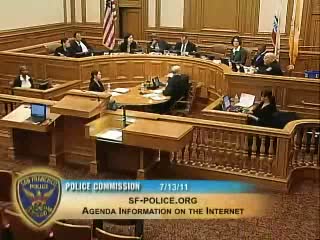
A department bulletin announced at the July 13 meeting requires that permission-to-search be obtained in writing or audio-recorded beforehand and instructs officers to survey, document and secure any video evidence, including handheld phone video.
The SFPD chief briefed the commission on a department bulletin clarifying how officers must document consent searches and handle video evidence.
The bulletin requires that permission to search be obtained in writing on the department—s permission-to-search form or, if consent is oral, that it be audio-recorded before the search is executed. Previously, officers sometimes documented consent after an entry or recorded it later; the bulletin now requires the record be made prior to executing the search or the officer should obtain the necessary equipment before proceeding.
The bulletin also instructs officers to survey a scene for any and all video, including handheld cell-phone recordings, and to document when no video could be found by adding a notation in the police report. If officers locate video they must take steps to secure it as best evidence.
Commissioners and staff discussed practical limits on obtaining written or recorded consent in every circumstance; the chief said the district attorney—s office pushed for the requirement so evidence would be reliably documented for court. Chief acknowledged there may be rare circumstances where it is impractical to obtain written or recorded consent but the DA could decline to proceed in prosecutions if procedures were not followed.
What it means: officers are expected to secure contemporaneous documentation of consent and to take reasonable steps to find and preserve video evidence; the policy aims to bolster the evidentiary integrity of search and seizure documentation for court use.