Get Full Government Meeting Transcripts, Videos, & Alerts Forever!
Get email alerts on the Officer Supports topic
No spam. Unsubscribe anytime.
SFPD presents crime trends and officer support programs; commission requests ComStat audit
Summary
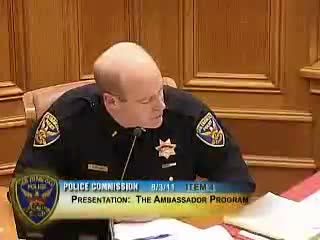
At its Aug. 3 meeting, the Police Commission received the chief's report showing slight year-to-date changes in crime (homicides at 29 vs. 28 last year) and a presentation from the Behavioral Science Unit on confidential officer supports, including a new MHN contract providing ten clinician visits and a West Coast post-trauma retreat.
The San Francisco Police Commission on Aug. 3 received the chief's report covering recent crime statistics, officer-involved incidents and personnel supports. Chief (identified in the meeting transcript as "Chief Sir") summarized recent crime trends and pledged to present a six-month statistical review to the commission at its Aug. 17 meeting.
On crime trends, the chief noted violent crime was "still trending downward at about 7%" in the last 30 days and said the department was tracking year-to-date homicide counts; "We're at 29 now I believe we were at 28 last year," the chief said during the meeting. The chief also proposed that the Controller audit ComStat to verify baselines and ensure integrity in automated reporting.
The commission then heard a detailed presentation from Sergeant Mary Dunnegan of the Behavioral Science Unit (BSU) on resources available to officers exposed to traumatic incidents. Dunnegan described BSU's confidential model, critical-incident debriefings (mandated within 72 hours for shooters), peer support teams on call 24/7, chaplain involvement and a follow-up protocol that includes a one-year anniversary check-in.
Dunnegan outlined benefits available under a new MHN contract: "as of July 1, our officers now can utilize this 6 day residential treatment for first responders, for free," and members and dependents receive 10 no-cost visits to a clinician (face-to-face or web video), a 24/7 assistance line and legal and financial referrals. She said the department refers officers to police-specialty clinicians and that BSU maintains de-identified monthly statistics on peer-support contacts (roughly 5,000'6,000 peer-support contacts per year).
Commissioners asked whether additional clinical staff (on-site psychologists or a police-specialty PhD clinician) would help with return-to-duty assessments and whether a structured needs assessment for returning veterans or anonymous officer surveys should be conducted. Dunnegan said the unit could use additional addiction-specialty officers and occasional part-time clinical leadership; she also emphasized confidentiality and that most officers use short-term crisis counseling more than long-term therapy but that the unit is pursuing added clinician check-ins.
The commission discussed making certain aspects of post-incident support mandatory (initial debriefing) versus voluntary longer-term treatment; Dunnegan and others warned that over-mandation can stigmatize officers and reduce voluntary help-seeking, while commissioners expressed interest in expanding mandated follow-up where appropriate.
The commission indicated it would schedule a fuller discussion and potential action item on BSU resourcing in September and requested the chief's six-month crime-statistics presentation for Aug. 17.