Get Full Government Meeting Transcripts, Videos, & Alerts Forever!
Get email alerts on the Crime And Public Safety topic
No spam. Unsubscribe anytime.
S.F. police chief reports violent crime down, redeploys units and expands youth programs
Summary
At the Aug. 10 Police Commission meeting, the chief reported violent crime was about 7% lower and Part 1 crimes were flat year-over-year; he described summer youth-job partnerships, a community youth center opening and redeployment of patrol motorcycles to improve response times.
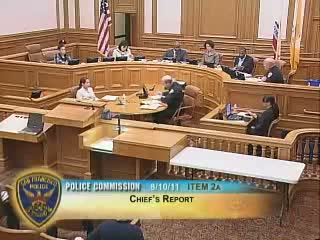
The San Francisco Police Commission received a briefing from the police chief on Wednesday, Aug. 10, 2011, who said violent crime was down roughly 7% citywide while overall Part 1 crimes remained essentially flat compared with last year.
The chief told commissioners that homicides were at approximately a 30-year low and that the department was focusing on prevention work with young people to avoid future spikes in violence. He cited a summer "garden" jobs project run in partnership with the Public Utilities Commission and the sheriffs office that roughly doubled placements from the prior year and said the department hopes to place more than 100 young people from ZIP code 94124 next year.
On community facilities, the chief noted the recent opening of the Third Street community youth center (CYC), which he said was created to serve Asian youth while welcoming all neighborhoods. He said the opening showed how the community came together after a recent local tragedy.
Operational changes described by the chief included redeploying about 50 additional officers to nights and weekends in areas where an estimated 60%–65% of violent crime occurs, relocating approximately half of the departments motorcycles to neighborhood stations to reduce travel time to beats, and assigning a portion of Hondas to Park Station for parks and beaches patrols. He also described work to consolidate units into a special victims unit handling domestic violence, human trafficking and elder abuse to improve investigative coordination.
The chief highlighted the departments partnership in a statewide drunk-driving enforcement project, saying the citys campaign exceeded the Office of Traffic Safetys media-target metrics and contributed to an almost 10% drop in alcohol-related fatal and injury accidents during the grant period. He confirmed the department expects continued grant support and will reapply.
Commissioners thanked the chief for the report and asked follow-up questions about the award metrics and how outreach is balanced against enforcement for low-level quality-of-life issues. The chief said the department maintains outreach teams and conducts joint encampment-engagement efforts with public health and DPW for several days prior to cleanup operations, with an estimated 75%–80% compliance rate when services are offered.
The commission did not take a formal vote on operational items during the presentation. The most immediate next steps recorded were scheduling follow-up priority items and calendaring mental-health work for officers (see separate article on the priorities discussion).