Get Full Government Meeting Transcripts, Videos, & Alerts Forever!
Get email alerts on the Community Ambassadors topic
No spam. Unsubscribe anytime.
San Francisco relaunches Community Ambassadors program after yearlong pilot
Summary
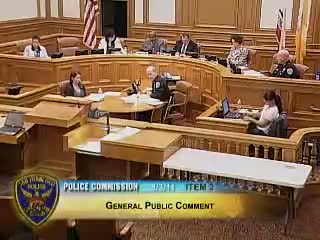
City officials and the Police Commission on Aug. 3 relauched a permanent Community Ambassadors program for District 10 after a yearlong pilot that logged more than 22,000 resident interactions; program leaders said ambassadors will focus on safety, translation and referrals while remaining civilian and unarmed.
The San Francisco Police Commission on Aug. 3 heard a full presentation on the Community Ambassadors program, a community-led public-safety outreach effort relaunched this week as a permanent city program. Adrianne Pond of the Office of Civic Engagement and Immigrant Affairs told commissioners the pilot logged "over 22,000 interactions with District 10 residents," citing the program's role in language access, conflict resolution and city-service referrals.
Pond said the ambassadors operate as a visible, civilian presence on transit corridors and commercial strips, offering multilingual information, immediate referrals to 311 and community partners and basic first-aid and safety assistance. She described the teams as "multi-racial, multi-lingual" and said the pilot was evaluated with baseline surveys and daily logs reviewed by team leaders and program managers.
Commissioners asked operational questions about staffing, hours and safety. Pond said ambassadors generally work two shifts identified with MTA staff as peak outreach windows, roughly 8 a.m. to 5 p.m. and 9 a.m. to 7 p.m., with occasional evening or weekend deployments for events. Field supervisor Richard Whipple said ambassadors carry city-provided cell phones with 311 and emergency numbers on speed dial to make referrals on the spot.
Several commissioners and police officials emphasized the program's civilian nature. Pond and Whipple said ambassadors are unarmed and trained in self-defense, de-escalation and documentation; the program pairs community-based partners, the Police Department and transit staff to identify hotspots where ambassadors will be deployed. Chief and other department leaders praised the ambassadors' visibility and cooperation with beat officers, noting the relaunch was announced earlier in the week by the mayor and chief.
Pond described the program's staffing and diversity: a program manager, field supervisor, two program assistants and 12 ambassadors who she said speak nine languages and represent a range of ages and neighborhoods in the Southeast sector. She said the program relied on a small mix of private funding and city partnerships; private funds will sustain some activities for roughly two more years while the program seeks additional resources.
Commissioner Angela Chan asked whether ambassadors refer residents to nonprofit services in addition to city agencies; Pond said the office regularly adds community partners and will accept partnership requests through the program manager, Richard Whipple. Commissioners also pressed program leaders on ambassador safety, and Pond said the team uses training, crew deployments and clear protocols with SFPD to lower risk.
The commission did not take a formal policy vote on funding at the Aug. 3 meeting but signaled support for bringing operational follow-ups and evaluation materials back to future agendas. Pond left commissioners with pilot evaluation materials and brochures and said staff would return with additional data as the permanent program scales up.