SFPUC staff says WESIP changes do not reduce level-of-service goals; commissioners press for tracking
Loading...
Summary
SFPUC staff told commissioners the Water System Improvement Program (WESIP) scope continues to meet adopted level-of-service goals for seismic, delivery and water-quality performance; commissioners pressed for clearer tracking metrics and copies of outside reviews. Public commenters urged caution about raising the system-sizing figure from the 265-MGD policy checkpoint toward a 300-MGD facilities figure.
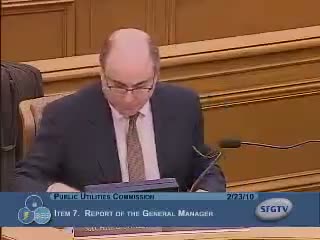
Julie Labonte, the SFPUC official who led the commission’s WESIP update, told the board on Feb. 23 that the program’s recent scope changes have been analyzed and the “report that was given to you last week does confirm that the existing scope of the WECIP does fully comply with our seismic and delivery reliability goals.” Labonte said the program’s LOS (level-of-service) framework — water quality, seismic reliability, delivery reliability and water supply — dates to 2005 and is used to vet scope changes and value-engineering options.
The presentation explained two seismic goals: restore basic service within 24 hours after a major earthquake and restore projected 2030 average-day demand within 30 days. Labonte said the water-supply goal assumes meeting average annual demand using the system’s three watershed sources and models an extended drought; it also calls for limiting rationing to no more than 20 percent in the referenced design scenario.
Commissioners focused questions on apparent numerical inconsistencies. Several members pointed to two figures discussed in the memo and presentation — a policy checkpoint of 265 million gallons per day (MGD) through 2018 and a 300-MGD facility-sizing number for 2030 — and asked which number governs LOS protection. SFPUC staff and an infrastructure manager replied the two numbers serve different planning roles: "The 265 is a policy-driven number. It is not a facilities-driven number," one manager said, and facilities were sized to accommodate 300 MGD for 2030 even as policy checkpoints limit imports to 265 MGD until a future review.
Commissioners asked staff to provide the underlying analyses and outside reviews that support the staff conclusion. Labonte said the LOS confirmation report had been reviewed by consulting firms (CH2M Hill, AECOM referenced in the meeting) and the California Seismic Safety Commission and that staff would provide those documents to commissioners. One commissioner requested a concise tracking process so the commission can follow attainment of LOS goals as projects are built; staff said they would look into options for an ongoing tracking framework.
Public commenters at the meeting acknowledged the analysis but urged political caution. Peter Drechmeier of the Tuolumne River Trust said the 265-MGD compromise had been a crucial political settlement that reduced litigation risk and that “when the 300 number gets floated out there, people are gonna get very nervous.” Another commenter recommended further public presentations to synthesize the seven workshops that led to the LOS adoption so new commissioners can see the path of decisions.
The commission did not change LOS policy at the meeting. The most recent staff report and the associated confirmation analysis remain available to commissioners, and staff committed to return with a report on LOS-tracking options at a future meeting.