Get Full Government Meeting Transcripts, Videos, & Alerts Forever!
Get email alerts on the Infrastructure topic
No spam. Unsubscribe anytime.
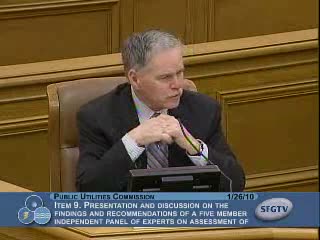
Independent panel finds WESIP management strong but flags shutdown and change‑order risks
Summary
An independent five-member panel told the SFPUC the Water System Improvement Program has robust procedures and capable staff, but highlighted critical risks—system shutdown management, environmental permitting, low-bid change orders, supply-chain and seismic/weather contingencies—and recommended an independent construction audit panel and strengthened reporting.
The commission reviewed the final report from an independent five-member panel that evaluated the Water System Improvement Program (WESIP), a multi-billion-dollar capital program. The panel, led by Russ Stepp, concluded that the PUC has built a robust program with capable staff and appropriate systems but identified several high-priority risks and recommended specific governance and reporting improvements.
Stepp emphasized the program—s strengths—procedures, construction-management tools and experienced staff—but warned the panel—s top risk is the management of water-system shutdowns required during construction. "Any hiccup in these shutdowns could really create some serious water supply problems for the city and the region," he said.
Other risks the panel identified include environmental permitting delays and the potential for aggressive contractor claims in a low-bid market, equipment-delivery vulnerabilities for specialty parts, seismic or weather events impacting tunneling work, and the need for succession planning for key staff.
Recommendations included: - Test and verify shutdown procedures during upcoming operations and maintain a robust contingency plan for outages; - Institute earned‑value reporting (planned value expended vs. actual) alongside project counts; - Establish a small, periodic independent construction-audit panel to provide quick, focused checks during the next 12–18 months; - Implement performance evaluations for contractors and consultants and improve communication and orientation materials for commissioners (including demos of the construction-management information system).
Julie LaBonte, speaking for staff, said the PUC had already begun a matrix tracking recommendations with assigned leads and timelines, and she pledged to include progress in regular updates to the commission. Commissioners pressed on change‑order controls and whether contract support (city attorney, contract staff) and field decision-making structures were sufficient; panelists and staff said those support elements had been evaluated and found largely present but urged continued attention.
Commissioners and stakeholders welcomed the review; staff agreed to follow up with a prioritized implementation plan, reporting changes to the quarterly package, and proposals for the suggested audit panel.