Get Full Government Meeting Transcripts, Videos, & Alerts Forever!
Get email alerts on the Finance topic
No spam. Unsubscribe anytime.
SFPUC reports lower water sales, slimmer reserves; annual CAFR published
Summary
The San Francisco Public Utilities Commission heard a second-quarter financial update showing water consumption down about 4% year over year and projected year-end reserves materially below prior targets; staff rolled figures into a 10-year plan and released the SFPUCComprehensive Annual Financial Report.
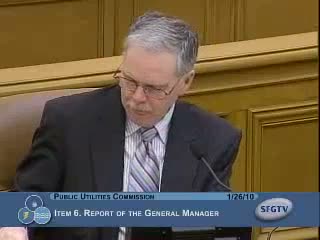
The San Francisco Public Utilities Commission received a financial briefing on Jan. 26 that showed retail and wholesale water sales running below budget and a consequential drop in projected reserves for the water enterprise.
Todd Reitstrom, assistant general manager and chief financial officer, told commissioners that water usage was "down nearly 4% year over year" and that the year-end reserve projection for the water enterprise is now roughly $32.7 million, substantially lower than the $53.1 million assumed when the budget was adopted. He said the wastewater enterprise also faces a reserve shortfall (about $17 million lower), while Hetch Hetchy posted favorable variances (about $13 million higher).
The drop largely reflects sustained conservation, Reitstrom said, and staff incorporated those trends into the PUC—s 10-year financial projections. The presentation noted wholesale rates are reset annually and will be reviewed in the ongoing budget deliberations with hearings scheduled for March.
Commissioners pressed for the assumptions behind the projections: Reitstrom said staff uses recent delivery and meter-read data, projected population and housing growth, and implements automated meter infrastructure (AMI) accuracy improvements in the model. He said the long-term consumption growth rate in the projections is modest (flat to about 0.5% annually) and that the baseline conservatively assumes customers will continue conservation behavior rather than revert to pre-recession usage patterns.
The report also clarified capital spending figures: apparent jumps in capital totals reflect multi-year appropriations that carry forward into current-year cash outlays as projects move from planning and design to construction. On a question about storm-related costs tied to a prior flood on Folsom Street, staff confirmed the budgeted estimate was $500,000, not $500 million.
In a separate but related briefing, Reitstrom introduced the SFPUC—s first consolidated Comprehensive Annual Financial Report (CAFR). The CAFR compiles audited financial statements, 10-year operating histories and key ratios required under Governmental Accounting Standards Board and Government Finance Officers Association guidance. Staff said the CAFR is intended primarily for rating agencies and bond investors but will be paired with a "popular report" summary tailored to the public.
Commissioners asked for clearer, higher-level performance reporting tied to earned-value or planned-versus-actual spending on the major capital projects, and staff agreed to revise quarterly reporting formats and to provide more frequent briefings to incoming commissioners. The PUC will return with budget and rate recommendations in the coming months and a third-quarter update in mid-April.
The commission approved routine procedural items earlier in the meeting and will consider the budget hearings and rate actions as scheduled.